An electrical panel safety inspection checklist details tasks to verify your home’s breakers, wiring connections, grounding, and panel integrity comply with Delaware electrical codes. Overlooking loose connections or corrosion can trigger breaker failures and electrical fires, leading to repair bills over $3,500 and insurance claim denials in Smyrna and Wilmington. In the next sections, you’ll find tools, step-by-step procedures, and tips for handling common panel issues or scheduling professional inspections in Delaware.
Key takeaways
- Inspect for buzzing, humming, or burning smells near your panel.
- Look for tripped breakers, flickering lights, or intermittent power loss.
- Ensure 3 feet of clear space around your electrical panel.
- Check for signs of rust, corrosion, or water damage on the panel.
- Verify accurate labeling for all circuits and breakers.
- For any issues, contact Conductive Electrical Contracting for a professional inspection.
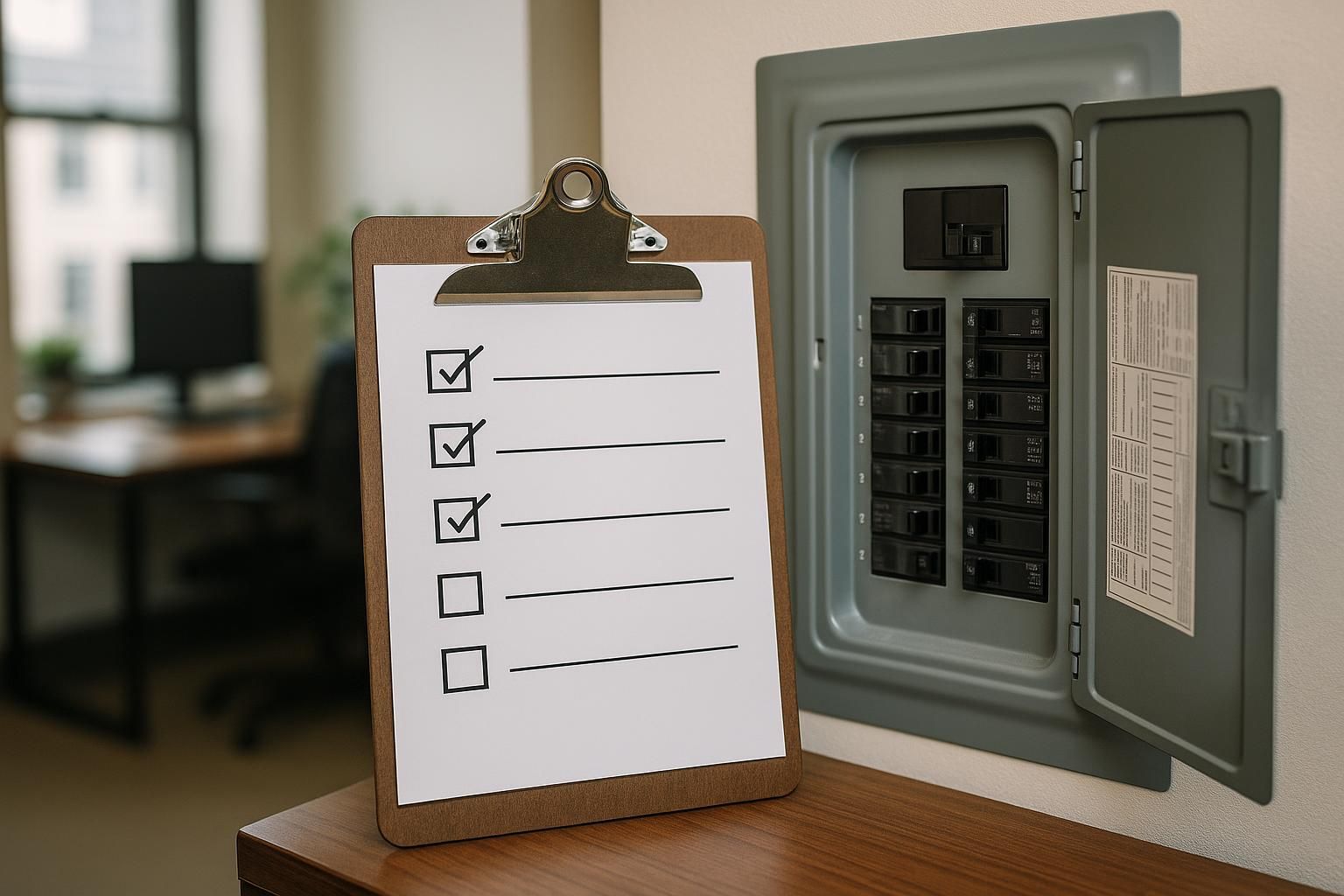
Electrical Panel Safety Inspection Checklist: Step-by-Step Guide
Your electrical panel, also known as your service panel or breaker box, is the core of your home’s electrical system. It safely distributes power. Regular checks ensure smooth, safe operation. Ready for an essential electrical panel safety inspection checklist?
Before You Begin: Safety First!
Before inspecting your electrical panel, prioritize safety. Electricity is powerful. While visual checks are safe for homeowners, always leave opening the panel cover to a qualified professional. Live wires and high voltage demand expert handling. Think checking your car’s oil versus rebuilding the engine.
- Keep Clear: Maintain at least 36 inches of clear space in front of the panel, per National Electrical Code (NEC) requirements. Clutter obstructs access.
- No Water: Ensure the area around the panel is dry. Water and electricity are dangerous.
- Wear PPE: For external visual checks, insulated gloves and safety glasses are recommended.
- When in Doubt, Call a Pro: If uncomfortable or unsure, stop immediately. Your safety is paramount.
The Visual Inspection (Exterior)
Perform a quick, safe visual check of your electrical panel’s exterior without opening it.
- Clear Labeling: Are circuits clearly labeled? Know which breaker controls each part of your home.
- Panel Door: Does the panel door open and close easily, latching securely? A loose door exposes components.
- Rust or Corrosion: Look for discoloration, rust, or corrosion on the exterior, indicating moisture intrusion.
- Missing Knockouts:g Check for missing “knockout” plugs. These cover unused openings; missing ones expose live components.
- Strange Sounds or Smells: Listen for buzzing, crackling, or humming. Any burning odors? These are urgent red flags.
- Heat: Carefully feel the panel door. Is it unusually warm? Overheating signals a serious issue.
Internal Checks: Leave These to the Experts
The exterior check provides initial clues, but internal inspection requires a licensed electrician. They safely open the panel to check crucial internal components for wear, damage, or improper wiring, including:
- Loose or Damaged Wiring: Loose connections can lead to arcing and fire hazards.
- Overloaded Circuits: Are circuits correctly sized for demand? Overloaded circuits risk fire.
- Proper Grounding: A correctly grounded system protects against shock hazards.
- Correct Breaker Sizes: Breakers must match the wire gauge they protect.
- Signs of Overheating: Burn marks or discolored wires inside indicate severe problems.
If you notice any red flags, or if it’s been a while since a professional inspection, contact Conductive Electrical Contracting for a thorough assessment. Your home’s safety and your peace of mind are paramount.
Why Electrical Panel Safety Inspections Matter in Smyrna DE
Your electrical panel is the heart of your home or business’s electrical system, much like the main junction of arteries in the human body. It distributes power safely to every light, appliance, and outlet. When this critical component is overlooked, it can lead to serious consequences, often without obvious warning signs.
For residents and business owners in Smyrna, DE, and across New Castle and Kent Counties, regular electrical panel safety inspections are not just a recommendation; they are a vital safeguard. Think about it: are your breakers tripping frequently? Do you notice flickering lights? These could be subtle clues pointing to deeper issues within your panel.
Ignoring these warnings can escalate minor problems into significant hazards, including electrical fires, dangerous shocks, and costly system failures. An inspection by a qualified professional identifies potential overloads, faulty wiring, or outdated electrical components before they become emergency situations. It ensures your system adheres to current safety codes, providing peace of mind and protecting your property’s value. To ensure your electrical panel is operating safely and efficiently, consider reaching out to Conductive Electrical Contracting for an expert assessment.
Tools and Materials Needed for Your Inspection
Before you even think about approaching your electrical panel, safety must be your absolute priority. Think of it like preparing for a significant road trip across Delaware, you would never start without checking your tires and oil, would you? Similarly, inspecting your electrical panel requires the right gear to keep you safe and provide accurate readings.
Safety Gear You Can’t Skip
- Insulated Gloves: These are non-negotiable. They provide a crucial layer of protection against electrical shock, offering peace of mind during your inspection.
- Safety Glasses: Protect your eyes from any unexpected sparks or debris that could arise, no matter how careful you are.
- Non-Conductive Footwear: Rubber-soled shoes offer an additional barrier between you and the ground, further enhancing your safety.
Essential Inspection Tools
Once you are properly geared up, these are the fundamental items you will need to get a clear picture of your panel’s health:

- Flashlight or Headlamp: Panel interiors can be surprisingly dim. A bright light ensures you do not miss any details, especially if your panel is tucked away in a dimly lit basement in a historic Wilmington home.
- Screwdrivers (Phillips and Flathead): For safely removing and reattaching the panel cover. Always use tools with insulated handles.
- Non-Contact Voltage Tester: This handy device lets you check for live voltage without touching wires directly. It is perfect for a quick, preliminary safety check.
- Multimeter: For more detailed voltage, current, and continuity measurements. Make sure you understand how to use it safely before you begin.
- Pen and Paper or Digital Notepad: To meticulously record your observations, including any issues, odd sounds, or unusual smells you encounter. This record will be invaluable if you need to contact Conductive Electrical Contracting for further assistance.
While this list covers the basics for a homeowner’s preliminary check, remember that professional electricians, like our team serving New Castle County and Kent County, bring advanced tools like thermal imaging cameras to detect invisible hot spots. If you feel uncomfortable at any point or suspect a significant issue, it is always best to halt your inspection and call in the experts. Your safety, and the safety of your Smyrna or Wilmington home, is paramount.
Common Electrical Panel Issues to Watch For
Your electrical panel powers your home or business. Recognizing early signs of issues prevents major safety hazards and keeps your property safe and powered.
What Your Electrical Panel Might Be Telling You
Watch for these red flags, signaling it is time for a professional inspection.
- Frequent Breaker Trips: Constant tripping, especially with certain appliances, signals an overloaded circuit. This can lead to overheating and fire risks.
- Flickering or Dimming Lights: Regular flickering or dimming, especially when other appliances activate, may signal loose wiring or an aging electrical system.
- Strange Noises or Odors: Buzzing, humming, or crackling from the panel is concerning. A burning smell, like melting plastic, is an emergency, signaling arcing, overheating wires, or faulty components.
- Warmth or Discoloration: A warm or hot panel cover, scorch marks, or discoloration are serious signs of overheating and potential fire hazards.
- Corrosion or Water Damage: Rust, moisture, or water damage on or inside your panel requires immediate professional attention. This compromises integrity and is dangerous.
- Outdated Panel Models: Older panels, such as Federal Pacific Electric (FPE) Stab-Lok or Zinsco, have design flaws making them prone to failure and fire. If your property has one, consider a service panel upgrade.
If you notice any of these symptoms, always contact Conductive Electrical Contracting for expert advice and reliable service.
Delaware Code & Local Regulations Affecting Inspections
Electrical inspections in Delaware aren’t just about functionality; they’re about safety, guided by specific codes. These regulations ensure your electrical system is safe, efficient, and up to modern standards.
Delaware generally adopts a version of the National Electrical Code (NEC), establishing foundational standards. However, local municipalities and counties often add their own amendments or specific requirements beyond the state’s baseline.
An electrical panel inspection in Smyrna, DE, for instance, might have different permit prerequisites or local interpretations than one in Wilmington or New Castle County. These local regulations address unique community needs. Ignoring them can lead to costly rework or common electrical wiring problems and safety hazards.
When are inspections truly needed? Major electrical projects, like service panel upgrades or installing new dedicated lines, almost always require permits and subsequent inspections. This ensures compliance, protecting you, your property, and potentially your insurance.
Deciphering all applicable codes for your specific project and location can be complex. For a precise understanding of the Delaware Code and local requirements in Kent County or wherever you are in our service area, it’s always best to contact Conductive Electrical Contracting. Our team is well-versed in navigating these essential safety standards.
When to Call a Licensed Electrician
While your visual inspection helps spot potential issues, some findings absolutely demand professional intervention. Ignoring these red flags can lead to serious hazards, including electrical fires and system failures.
If you observe any of the following, it is time to call a qualified electrician in New Castle County DE or Kent County DE:
- Burning Smells or Scorch Marks: Critical signs of overheating and potential fire risk within your panel.
- Frequent Breaker Trips: A constantly tripping circuit breaker indicates an overload or fault needing immediate investigation.
- Hot Panel or Breakers: Your electrical panel should never feel warm to the touch. Excessive heat suggests dangerous conditions.
- Unusual Noises: Buzzing, humming, or crackling from the panel signals loose connections or faulty components.
- Visible Damage or Corrosion: Rust, water stains, or physical damage inside or on the panel’s exterior compromises safety.
- Outdated Equipment: Older fuse boxes or panels from specific brands may need professional evaluation for safety upgrades.
- Major Electrical Changes: Planning high-demand appliance additions or a renovation in your Smyrna home? Your existing panel might require a service panel upgrade.
For your family’s safety and peace of mind, always defer electrical work to a licensed professional. If you notice any of these warning signs, please contact Conductive Electrical Contracting for a thorough assessment.
Frequently Asked Questions
What are the key signs that my electrical panel needs inspection?
Look for flickering lights, frequently tripping circuit breakers , a burning smell, or a warm panel cover. Any unusual buzzing or crackling noises coming from the panel also signal it is time for a professional check.
How often should I have my electrical panel inspected?
Most experts recommend a professional electrical panel inspection every 3-5 years, especially for older homes throughout New Castle County and Kent County. If you have recently added major appliances or completed renovations, an inspection is also a wise step.
Can I inspect my electrical panel myself, or do I need a professional?
While you can visually check the exterior of the panel for obvious damage, inspecting the internal components is dangerous and requires a licensed electrician. For your safety and to ensure compliance with local electrical codes in Delaware, always contact Conductive Electrical Contracting for internal panel inspections.
What are common hazards found during an electrical panel inspection?
Common hazards include outdated wiring , loose connections, overloaded circuits, corrosion, and faulty circuit breakers. These issues can lead to fire hazards, electrical shocks, or power outages if not addressed promptly and professionally.
What should I do if I discover issues during an electrical panel inspection?
If you notice any problems, from a burning smell to persistent buzzing sounds, turn off power to the affected area if safe to do so. Then, immediately contact Conductive Electrical Contracting . Never attempt to fix electrical panel issues yourself.
Conclusion
Leveraging 20+ years of local, family-owned expertise in Delaware electrical codes and practices to ensure safe DIY inspections and timely professional support.
About the Author
Jeff King – Jeff King is the owner and lead electrician at Conductive Electrical Contracting, a family-owned Delaware electrical contractor based in Smyrna with over 20 years of experience serving New Castle, Kent, and Cecil counties.