Power surges are quietly destroying electronics in Delaware homes every single day, and most homeowners never see it coming. A single surge event can wipe out thousands of dollars in appliances, smart devices, and HVAC equipment in seconds. What makes this worse is that surges cause billions in annual damage across the US, yet the majority of that damage is entirely preventable. This guide walks you through exactly what surge protection you need, how to install it correctly, how to maintain it, and how to avoid the myths that leave most Delaware homes dangerously exposed.
Table of Contents
- Understanding power surges and why Delaware homes are at risk
- What you need for layered home surge protection
- How to install, maintain, and verify surge protection devices
- Troubleshooting common issues and debunking surge protection myths
- What to expect: Results, maintenance, and peace of mind
- Our take: What most surge protection guides miss for Delaware homeowners
- Protect your home with professional surge protection today
- Frequently asked questions
Key Takeaways
| Point | Details |
|---|---|
| Layered protection is best | Combine a whole-house SPD with quality power strips and UPS units for complete coverage. |
| Internal surges are common | Most damaging power surges come from within your own home, not the utility grid or storms. |
| Maintenance is as important as installation | Yearly checks and timely replacement of surge devices maximize safety and savings. |
| Local code matters | Delaware follows NEC, making professional installation both a smart and often required step. |
Understanding power surges and why Delaware homes are at risk
An electrical surge is a sudden spike in voltage that travels through your home’s wiring and can instantly damage or destroy any device plugged into an outlet. Normal household voltage runs at 120 volts. A surge can push that number into the thousands in a fraction of a second, overwhelming the circuits inside your electronics before they have any chance to react.
Most people blame lightning. That’s understandable, but it’s also wrong. More than 50% of surges actually come from inside your own home. Every time a large appliance like a refrigerator, air conditioner, or washing machine cycles on or off, it creates a small surge on your home’s electrical system. These internal surges are smaller than a lightning strike, but they happen dozens of times a day and slowly degrade your electronics over months and years.
Delaware homeowners face a specific combination of risks. Older homes throughout Wilmington, Newark, and Dover often have aging wiring that amplifies the effects of internal surges. Delaware also sits in a region with frequent summer thunderstorms, which increase the risk of utility-side surges. Add in the fact that US surge damage statistics show billions lost annually, and the picture becomes clear: this is not a minor inconvenience.
Common sources of power surges in Delaware homes:
- Large appliance cycling (HVAC, refrigerators, dryers)
- Utility grid switching and transformer issues
- Lightning strikes near power lines
- Faulty or outdated home wiring
- Overloaded circuits
| Surge source | Frequency | Damage potential |
|---|---|---|
| Internal appliances | Daily | Gradual, cumulative |
| Utility grid events | Weekly | Moderate to high |
| Lightning strikes | Seasonal | Severe, immediate |
| Wiring faults | Ongoing | Unpredictable |
Signs your home may already be experiencing surge damage include flickering lights, electronics that reset unexpectedly, appliances that fail earlier than expected, and circuit breakers that trip without obvious cause. Reviewing electrical safety tips for your home is a smart starting point before you invest in any protection system.
With the risks clear, the next step is to understand how to prepare your home’s defenses.
What you need for layered home surge protection
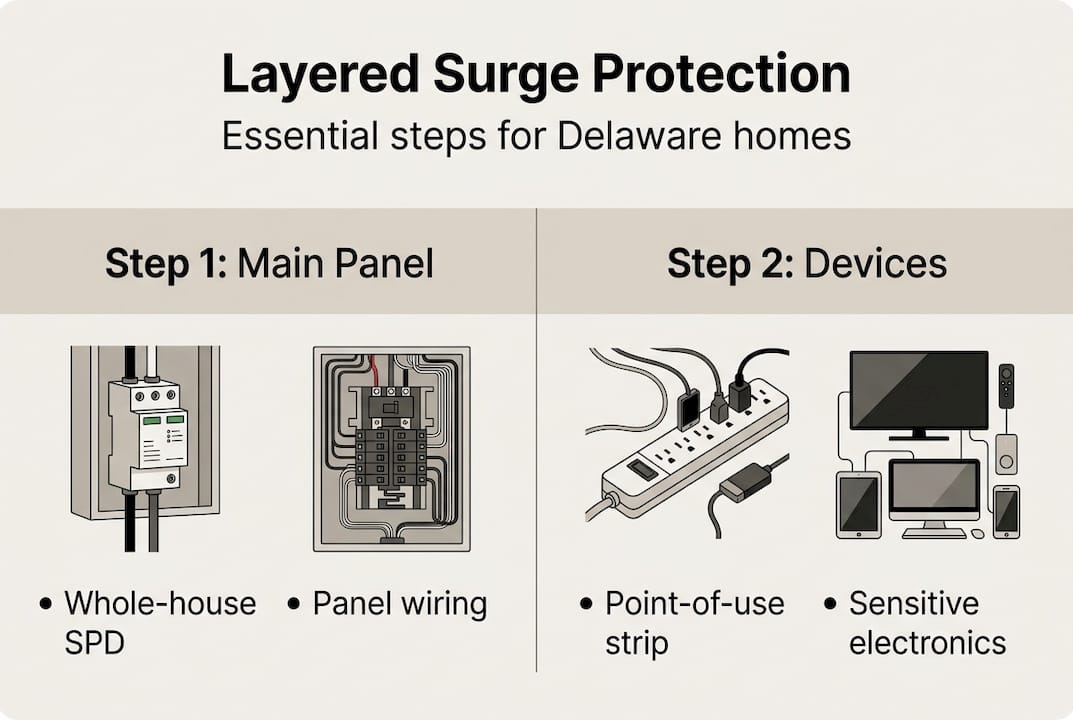
Layered surge protection means using multiple devices at different points in your electrical system so that any surge is stopped or reduced before it reaches your valuable electronics. No single device can do this job alone.
The foundation of a layered system is a whole-house surge protective device (SPD) installed directly at your main electrical panel. This is a Type 2 SPD, and it catches the bulk of any incoming surge before it even enters your home’s wiring. On top of that, you add UL1449-listed point-of-use power strips at individual outlets for sensitive electronics. For devices that absolutely cannot go down, like home office computers or medical equipment, a UPS (uninterruptible power supply) adds a third layer of battery-backed protection.
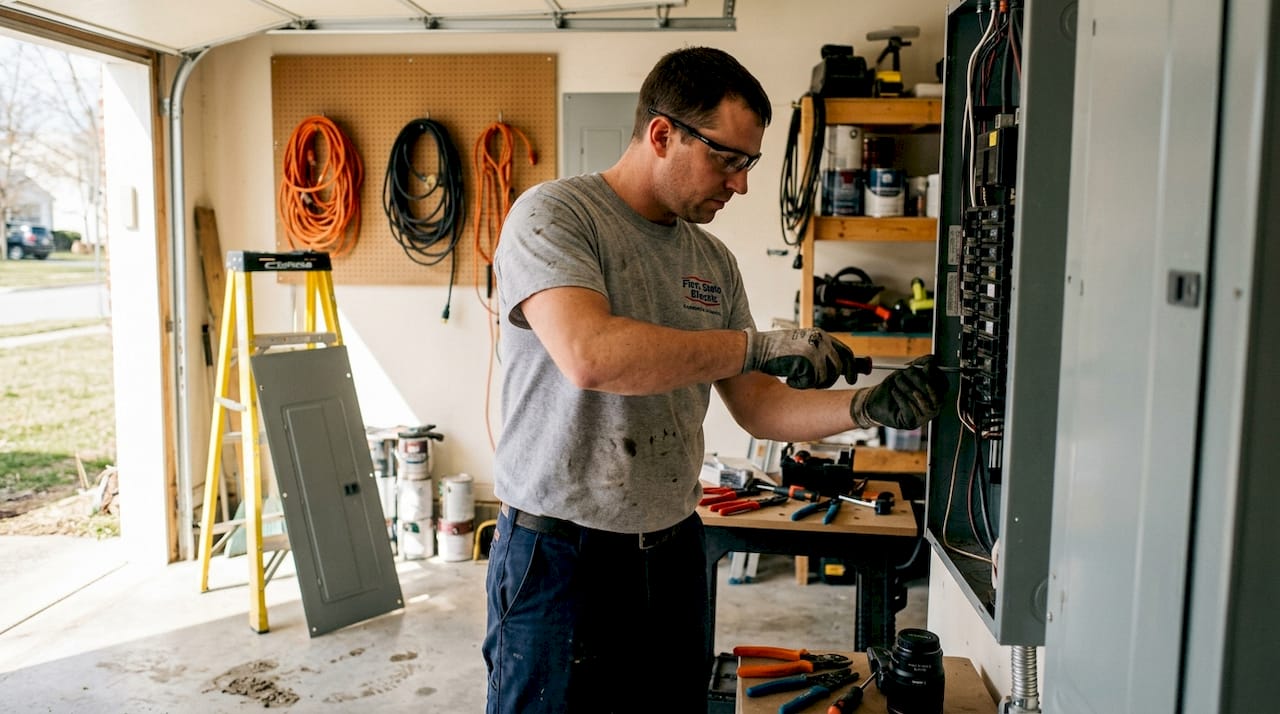
The NEC 2023 surge requirements now mandate that dwelling units have a Type 1 or Type 2 SPD installed, especially during panel replacements. Delaware has adopted the 2020 NEC and is reviewing the 2023 edition, so this requirement is already in play for most panel work done in the state.
What you need for a complete layered system:
- Type 2 SPD at the main electrical panel
- UL1449-listed power strips at outlets for TVs, computers, and appliances
- UPS unit for computers, routers, and medical devices
- Proper grounding throughout the system
| Device type | Where it’s installed | What it protects against |
|---|---|---|
| Whole-house SPD | Main electrical panel | Large external and internal surges |
| Point-of-use strip | Individual outlets | Residual surges reaching devices |
| UPS | Desk or equipment area | Power outages and small surges |
Pro Tip: Never rely on a basic power strip as your only protection. Most cheap strips offer zero surge suppression. Look for the UL1449 certification label and a joule rating above 1,000 before trusting any strip with expensive electronics.
Learning more about whole-house surge protection options can help you understand what fits your home’s specific panel setup and wiring age. The surge protection basics are straightforward once you break them down by device type.
Once you know what’s required, the real work starts: installation.
How to install, maintain, and verify surge protection devices
Installing a whole-house surge protector is not a DIY job. The work happens inside your main electrical panel, which carries live voltage even when breakers are off. A licensed electrician in Delaware must handle this installation, and the typical cost runs between $200 and $500 depending on your panel type and location.
Steps to get your system properly installed and verified:
- Hire a licensed Delaware electrician with experience in panel work
- Confirm the SPD is UL1449 listed and meets NEC Type 2 requirements
- Choose a mounting location as close to the panel as possible to minimize lead length
- Have the electrician install and connect the SPD to a dedicated double-pole breaker
- Test the indicator light immediately after installation to confirm it’s active
- Document the installation date and keep the receipt for insurance purposes
Safety warning: Never open your electrical panel yourself to attempt SPD installation. Even with the main breaker off, the service entrance wires remain energized and can cause fatal electrocution. Always call a licensed professional.
Maintenance is just as important as the initial install. Replace SPDs every 2 to 5 years or immediately if the indicator light goes dark, because a failed indicator means the device has absorbed its maximum capacity and is no longer protecting your home. After any major storm or known surge event, inspect all indicator lights before assuming you’re still covered.
Pro Tip: Before a major storm hits, unplug large electronics like TVs and computers if you have time. Even the best surge protection system has limits, and a direct lightning strike nearby can overwhelm any device.
Our Delaware electricians serve communities across the state, and you can check service locations to confirm coverage in your area. The Delaware surge protection code is your reference for what’s legally required during any panel work.
Even with a system in place, mistakes and myths can put your investment at risk.
Troubleshooting common issues and debunking surge protection myths
Surge protection myths are everywhere, and believing the wrong ones can leave your home completely exposed. Let’s clear up the most damaging ones first.
Top myths that put Delaware homeowners at risk:
- Myth: A power strip is enough protection. Power strips alone are not adequate for most surge protection needs. Many strips have no suppression at all.
- Myth: More joules always means better protection. Joule rating matters, but lead length, grounding quality, and device placement matter just as much.
- Myth: Only outdoor lightning causes real damage. Internal surges from appliance cycling are the bigger daily threat to your electronics.
- Myth: A surge protector lasts forever. MOV components inside surge protectors degrade with every hit they absorb, silently losing effectiveness over time.
Important: A surge protector with a dead indicator light is just an extension cord. It provides zero protection and gives homeowners a false sense of security.
When troubleshooting your existing setup, check these items first:
- Verify all indicator lights on point-of-use strips are lit and green
- Confirm your home has proper grounding at the panel (ask your electrician if unsure)
- Check that no single circuit is overloaded with too many high-draw devices
- Look for strips that are more than 5 years old and replace them proactively
- Make sure your whole-house SPD indicator is still active at the panel
A surprising fact worth knowing: two-thirds of surge-damaged devices are less than five years old. That means brand-new smart TVs, laptops, and appliances are just as vulnerable as older equipment. Newer electronics actually contain more sensitive microprocessors that are easier to damage from even small voltage spikes.
If you’re unsure about your home’s grounding or wiring condition, a Wilmington electrician can run a full inspection and identify weak points before a surge does the work for you.
With common mistakes solved, let’s examine what true peace of mind looks like.
What to expect: Results, maintenance, and peace of mind
Once a proper layered surge protection system is in place, the results are measurable. Layered surge protection can reduce let-through voltage from 20,000 volts down to under 150 volts, which is the difference between a destroyed appliance and one that keeps running without issue.
Benefits you can expect after a proper installation:
- Dramatically reduced risk of appliance and electronics failure
- Potential insurance discounts or easier claims with documented NEC-compliant installation
- Longer lifespan for expensive devices like smart TVs, HVAC systems, and refrigerators
- Increased home resale value with a code-compliant electrical system
- Peace of mind during Delaware’s active storm season
For long-term success, build a simple maintenance routine. Check all indicator lights every six months. Replace point-of-use strips every two to three years even if the light is still on. Schedule a post-storm inspection with your electrician after any significant weather event. Keep all receipts and installation records in case you need them for an insurance claim.
The benefits of surge protection go well beyond just protecting your TV. Your HVAC system, washer, dryer, dishwasher, and any smart home devices are all at risk without proper coverage.
| Benefit | What it means for you |
|---|---|
| Voltage reduction | Devices stay safe during surge events |
| Insurance compliance | Easier claims, possible premium savings |
| Device longevity | Appliances last closer to their full lifespan |
| Code compliance | Required for panel work in Delaware |
Exploring your surge protector options with a licensed professional is the most reliable way to match the right system to your home’s age, panel type, and risk level.
Our take: What most surge protection guides miss for Delaware homeowners
Most surge protection guides focus on product specs and ignore the real-world context that Delaware homeowners actually face. Here’s what we’ve learned from over 20 years of electrical work in this state.
First, NEC code compliance is not just a legal checkbox. It directly affects whether your insurance company will pay out after a surge event. Many homeowners file claims after a surge only to find out their non-compliant setup voids coverage. Keeping installation receipts and using a licensed electrician protects you legally and financially.
Second, the biggest losses we see are not from lightning. They come from aging panel boards and old wiring that amplify internal surges daily. A cheap power strip does nothing to stop that.
Finally, Delaware’s grid has its own quirks. Utility switching events and storm-related outages happen more here than homeowners realize. A layered, locally installed system built around your specific panel is the only approach that actually works. We recommend annual professional inspections and trusted surge protection from a contractor who knows Delaware’s code requirements inside and out.
Protect your home with professional surge protection today
Real peace of mind is closer than you think. If you’re a Delaware homeowner ready to stop gambling with your appliances and electronics, a properly installed whole-house surge protection system is the single most cost-effective electrical upgrade you can make.
At Conductive Electrical Contracting, we install code-compliant whole-house surge protection for homeowners across Wilmington and throughout Delaware. Our licensed electrical installation service ensures every job meets NEC standards, protects your insurance coverage, and gives you a system built to last. Contact us today for a free estimate and stop leaving your home’s electronics unprotected.
Frequently asked questions
What kind of surge protector do I need for my Delaware home?
You need a whole-house Type 2 SPD installed at your main panel, plus UL-listed point-of-use strips for sensitive devices like computers and TVs. Using both together gives you the layered coverage that NEC 2023 recommends.
Does Delaware law require surge protection in homes?
Delaware follows the NEC, which mandates surge protection for panel replacements and new construction as of the 2020 adoption, with the 2023 edition currently under review. If your panel has been replaced recently, an SPD is likely already required.
How often should surge protectors be replaced?
Replace surge protectors every 2 to 5 years or immediately if the indicator light fails, since a dark indicator means the device has lost its protective capacity. Always replace after a major surge event regardless of age.
Can I install a whole-house surge protector myself?
No. Always hire a licensed Delaware electrician for panel SPD work, since live service entrance wires remain energized even with the main breaker off and can cause fatal injury. DIY panel work also voids most homeowner insurance policies.
Are power strips enough to protect expensive electronics?
Power strips alone are not adequate for full surge protection, especially against internal surges from appliance cycling. Combine UL1449-rated strips with a whole-house panel SPD for real, lasting coverage.