A workplace electrical safety checklist guides Smyrna-area businesses through outlet inspections, circuit testing and GFCI verification to ensure on-site electrical systems meet Delaware codes. Missing damaged wiring in Kent or New Castle County inspections can draw $475 fines per violation and pause operations for two days. Drawing on Conductive Electrical Contracting’s 20+ years of Smyrna-based expertise, this guide shows you how to inspect outlets, label breakers and test GFCIs.
Key takeaways
- Inspect power cords and equipment for damage; replace anything frayed or cracked.
- Avoid overloading outlets; use quality surge protectors for electronics, not extension cords.
- Keep all liquids far away from electrical devices and outlets to prevent spills.
- Ensure your home office equipment uses proper grounding for enhanced safety.
- Only use UL-listed or certified electrical products and power strips.
- Locate your home’s circuit breaker box and understand how to shut off power.
Workplace Electrical Safety Checklist: Key Steps for DE Businesses
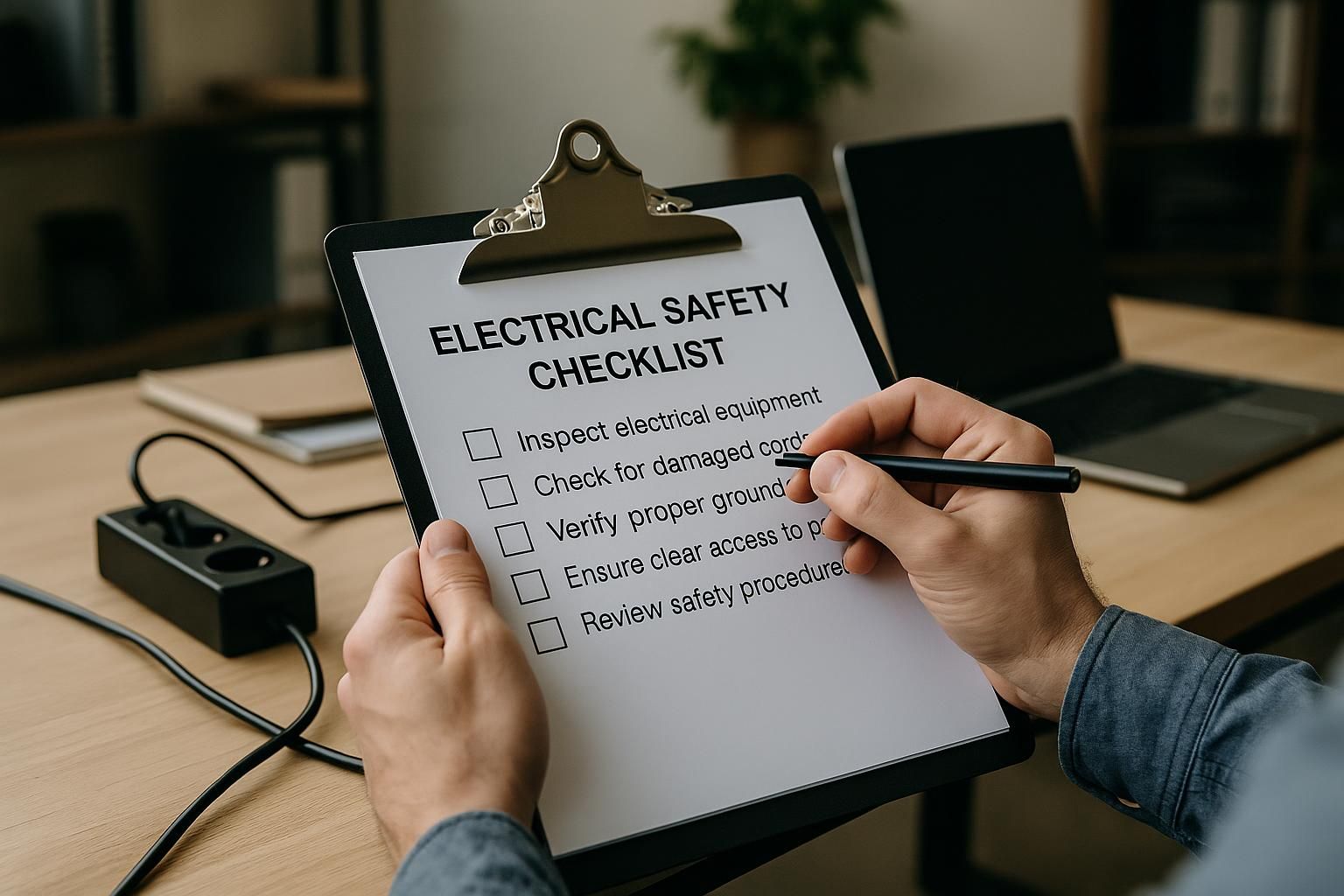
Ensuring electrical safety for your Delaware business protects both your team and assets. Whether you’re in a bustling Wilmington office or a workshop across Kent County, proactive steps prevent hazards. Here’s a quick workplace electrical safety checklist:
- Inspect Cords and Equipment Regularly: Look for frayed wires, cracked insulation, or loose plugs. A damaged cord is a fire waiting to happen, much like a faulty appliance could spoil a good day in Smyrna.
- Avoid Overloading Outlets: Never “daisy-chain” power strips or plug too many high-draw devices into one outlet. Each circuit has limits; exceeding them invites overheating and potential fires.
- Verify Proper Grounding and Service Panels: Ensure your building’s electrical system is correctly grounded. An updated service panel is also key for modern demands, especially in older New Castle County structures.
For a thorough safety assessment or upgrades, consider reaching out to contact Conductive Electrical Contracting.
1. Inspect Outlets, Switches & Wiring for Damage
Your home office relies on a steady, safe supply of electricity, but how often do you truly inspect the points where that power connects? A quick visual inspection of your outlets, switches, and visible wiring is your first, best line of defense against potential hazards. Think of it like checking your car’s tires before a long drive from Smyrna to Wilmington; a small flaw can lead to a big problem.
Here’s what to look for during your routine workplace electrical safety checklist:
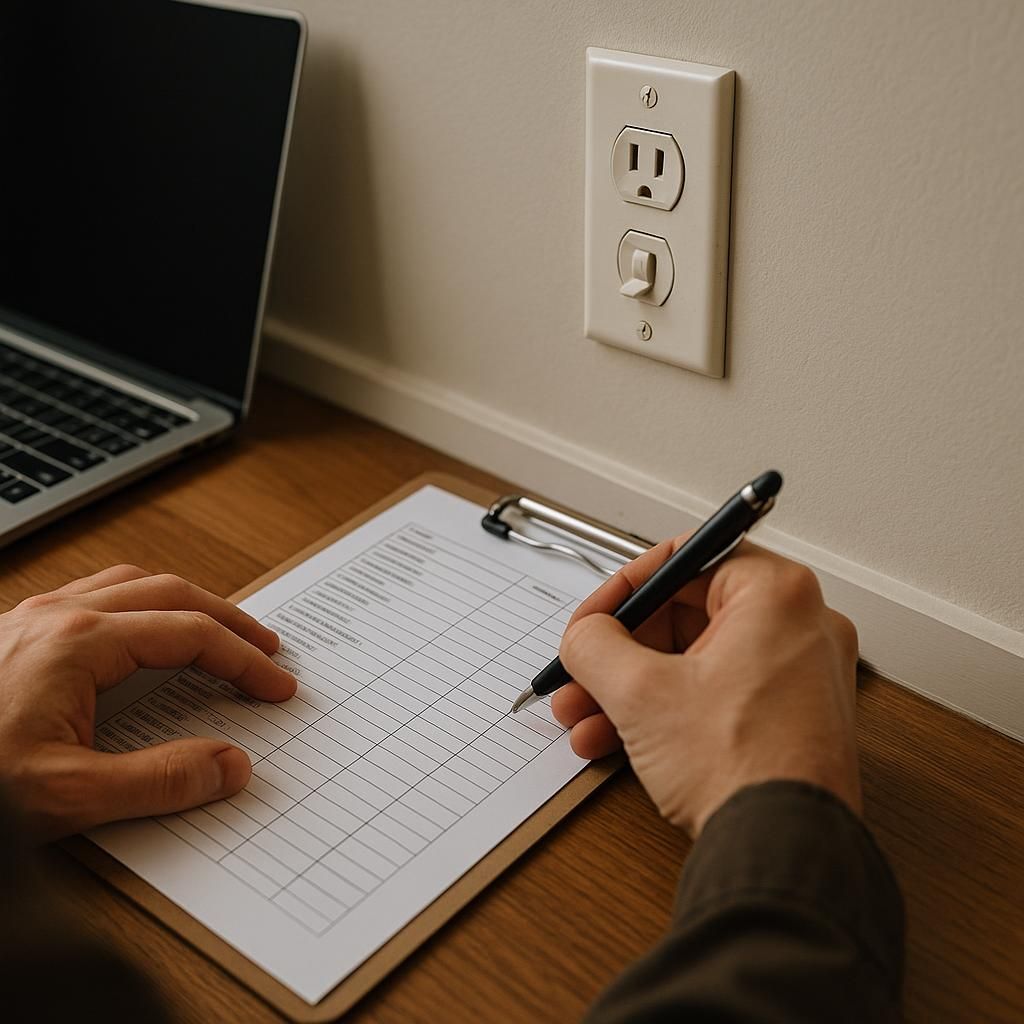
- Outlets: Look for any discoloration, scorch marks, or cracks on the outlet cover plate. Do plugs feel loose when inserted, or do they easily fall out? Loose outlet connections can generate heat, increasing fire risk.
- Switches: Pay attention to light switches. Do they feel warm to the touch? Do the lights flicker when you activate the switch? Any humming or buzzing sounds are also red flags.
- Cords and Plugs: Examine power cords connected to your devices. Are they frayed, kinked, or pinched under furniture? These are signs of common electrical wiring problems. Ensure plugs fit securely into outlets and that no grounding prongs (the third, round prong) are missing or bent. Overloaded extension cords, especially older ones, can overheat rapidly.
Spotting these small signs early can prevent bigger electrical issues, protecting both your equipment and your personal safety. If you uncover any of these warning signs in your New Castle County home or office, it is always best to contact Conductive Electrical Contracting for a professional assessment. Addressing these concerns promptly ensures your workspace remains safe and functional.
2. Test and Label Circuit Breakers and Panels
Understanding Your Electrical Panel
Your home office relies on a consistent, safe electrical supply. But what happens when the power suddenly cuts out? Having a well-organized and clearly labeled electrical panel is not just about convenience; it is a critical safety measure. Think of your circuit breakers as the gatekeepers of your electrical system, designed to trip and cut power when an overload occurs, preventing potential hazards like fires. To ensure maximum safety and efficiency, consider implementing an electrical panel safety checklist for your home.
The Testing Process
To identify which breaker controls specific areas or outlets in your home office, you will need to do a little detective work. Start by ensuring all critical work is saved and sensitive electronics are powered down. Then, with a helper, carefully flip breakers one by one, noting exactly which lights, outlets, or appliances lose power. This process might seem daunting, especially for older homes in areas like Smyrna or Wilmington, but it provides invaluable knowledge about your home’s electrical layout. Understanding why circuit breakers trip can help you diagnose and prevent future power interruptions.
Clear and Concise Labeling
After you have identified each circuit, the next step is to label your panel clearly. Forget vague terms like “bedroom” or “kitchen.” Instead, aim for specific descriptions. For example, “Office – East Wall Outlets,” “Office – Overhead Light,” or “Server Rack Dedicated Line.” Use a fine-point permanent marker or printed labels for readability.
When to Call the Experts
If your circuit breakers trip frequently, feel warm, or if your electrical panel appears old, rusty, or has exposed wiring, it is time for professional intervention. These are serious indicators of potential issues. Whether you need an electrical service panel upgrade or general electrical repairs, if you have concerns about your electrical panel’s safety or need help testing and labeling, we invite you to contact Conductive Electrical Contracting for expert assistance.
3. Verify Ground Fault Circuit Interrupters (GFCIs)
Your home office might be closer to water sources than a traditional commercial space, making Ground Fault Circuit Interrupters (GFCIs) absolutely essential. These smart outlets are designed to trip instantly, cutting power if they detect a ground fault, effectively preventing serious electrical shocks. They are your first line of defense, especially important in kitchens, bathrooms, basements, and garages.
How to Test Your GFCIs
- Locate: Find GFCI outlets, typically identified by “TEST” and “RESET” buttons, often near sinks or outdoor areas.
- Test: Press the “TEST” button. You should hear a click, and the power to the outlet should immediately stop.
- Reset: Press the “RESET” button to restore power.
Perform this vital test monthly. If a GFCI fails to trip or reset, it indicates a critical safety issue. Ensuring these devices are working correctly is a simple yet effective way to safeguard your workplace. For reliable GFCI installation or repair in your Smyrna or Wilmington home, consider reaching out to Conductive Electrical Contracting for professional help.
4. Check Portable Equipment & Extension Cords
Your home office relies on a variety of portable equipment. Think of your laptop charger, printer, or extra monitor. Just as you maintain your car for safe driving on Smyrna, DE roads, these devices need attention. Take a moment to inspect all power cords and plugs. Look for visible cuts, nicks, or frayed wires. Is a plug loose in the outlet, or missing its grounding pin?
Extension cords are often hidden hazards. They are designed for temporary power, not permanent solutions. Never “daisy-chain” multiple cords, and avoid running them under rugs where damage or overheating can occur unnoticed. An overloaded cord is a significant fire risk, especially in older homes common throughout Kent County.
If you find any damage, immediately unplug the item. Replace the cord or equipment right away. Ignoring a compromised cord only leads to bigger problems down the line. For serious concerns or if you are unsure about your home office’s electrical safety, consider professional help. Contact Conductive Electrical Contracting for safe solutions.
5. Review Backup Generator & Surge Protection
Ever had a power surge threaten your computer, or a storm in New Castle County cut your power mid-project? For a resilient home office, your workplace electrical safety checklist needs robust surge protection and a dependable backup generator.
Essential Surge Protection
Surge protectors act as an invisible shield for your electronics. While basic power strips offer limited defense, a whole-home surge protector, installed at your main electrical panel, provides comprehensive protection. It safeguards all devices from external surges like lightning or utility fluctuations, a vital upgrade for any modern home office.
Uninterrupted Power with a Backup Generator
Continuous operation is paramount for home office professionals. A backup generator ensures your work continues seamlessly during unexpected power outages. Whether you are in Smyrna DE or Wilmington DE, an automatically operating generator keeps computers, internet, and essential lighting online, preventing lost productivity.
Professional Assessment & Maintenance
Like any critical system, backup generators require regular testing and maintenance for readiness. For peace of mind, have a professional assess your home office’s needs for whole-home surge protection and generator solutions. A qualified electrician ensures correct installation and ongoing reliability.
Ready to boost your home office’s electrical resilience? Contact Conductive Electrical Contracting. Our family-owned business has served Delaware communities for over 20 years.
6. Maintain Records & Schedule Regular Inspections
Just like you keep track of important business documents, maintaining records for your home office’s electrical system is crucial. Why? It’s your blueprint for safety and efficiency. Document dates for all residential electrical repairs, new installations, or component replacements, from adding a dedicated line to replacing an old outlet. This history helps you identify recurring issues and provides valuable information for future electricians.
Good records can also be beneficial for insurance or when selling your property in Smyrna DE or the greater Wilmington area. But beyond DIY tracking, professional electrical inspections are vital. Regular check-ups can uncover potential hazards before they escalate. A licensed electrician assesses wiring integrity, electrical panel health, and overall system compliance.
For comprehensive electrical safety assessments and peace of mind in New Castle County or Kent County DE, contact Conductive Electrical Contracting.
Contact Conductive Electrical Contracting for Expert Assistance
After completing your home office electrical safety checklist, you might uncover a few concerns. Perhaps an aging outlet needs replacement, or you suspect a circuit is overloaded with all your new tech. These small issues can quickly become bigger problems if left unaddressed.
That is where professional expertise comes in. Conductive Electrical Contracting, a family-owned and BBB accredited business, brings over 20 years of experience to homeowners and businesses throughout Smyrna, Wilmington, and the broader New Castle and Kent County DE areas. We handle everything from general electrical repairs to dedicated lines for major appliances, ensuring your home office is safe and efficient.
Do not guess when it comes to electrical safety. For reliable solutions and peace of mind, consider reaching out to contact Conductive Electrical Contracting.
Frequently Asked Questions
How can I identify overloaded circuits in my home office?
Look for flickering lights, frequently tripped breakers , or warm outlets and cords. These are clear indicators your circuit might be drawing too much power, creating a potential fire hazard. Consider installing a dedicated circuit for your high-power office equipment.
What are the common electrical hazards to look for in a home office?
Keep an eye out for frayed or damaged power cords, cracked outlet covers , or any plugs that feel warm to the touch. Ensure proper ventilation around all electronics to prevent overheating, which is especially important in the often compact spaces of home offices across Delaware.
Is it safe to use extension cords and power strips for my home office setup?
Use extension cords only for temporary needs and always choose one rated for the electrical load of your equipment. Power strips with surge protection are beneficial, but never daisy-chain them. Avoid running cords under carpets or through doorways, as this can cause damage and tripping hazards.
How often should I inspect my home office electrical equipment?
Perform a quick visual inspection of all cords, plugs, and outlets monthly. For a more thorough assessment of your home’s wiring and electrical system, particularly if you live in an older home in Wilmington or Smyrna, consider a professional electrical safety inspection checklist every few years.
What should I do if I suspect an electrical problem in my home office?
If you notice burning odors, buzzing sounds from outlets, or frequent power disruptions, immediately unplug the device and turn off power to the affected area at your main service panel. For any persistent or serious electrical concerns, always contact Conductive Electrical Contracting for a professional and safe diagnosis.
Conclusion
Draws on Conductive Electrical Contracting’s 20+ years of family-owned, Smyrna-based expertise to deliver region-specific safety advice and code compliance tips.
About the Author
Jeff King – Jeff King is the owner and lead electrician at Conductive Electrical Contracting, a family-owned Delaware electrical contractor based in Smyrna with over 20 years of experience serving New Castle, Kent, and Cecil counties.