A home electrical safety inspection checklist is a step-by-step guide for Smyrna and Wilmington homeowners to inspect wiring, outlets and panels against Delaware building codes. Ignoring faulty wiring can triple fire risk and trigger up to $1,000 in code violation fines or $8,500 in average fire damage repairs. Conductive Electrical Contracting’s 20 years of local experience shape this guide on common hazards in New Castle and Kent Counties with a detailed inspection checklist.
Key takeaways
- Inspect outlets, switches, and cords for damage or wear.
- Test GFCI and AFCI breakers monthly for safety.
- Avoid overloading circuits; use extension cords properly.
- Ensure smoke and carbon monoxide detectors are working.
- Keep electrical panels clear and properly labeled.
- Contact a professional electrician for routine inspections.
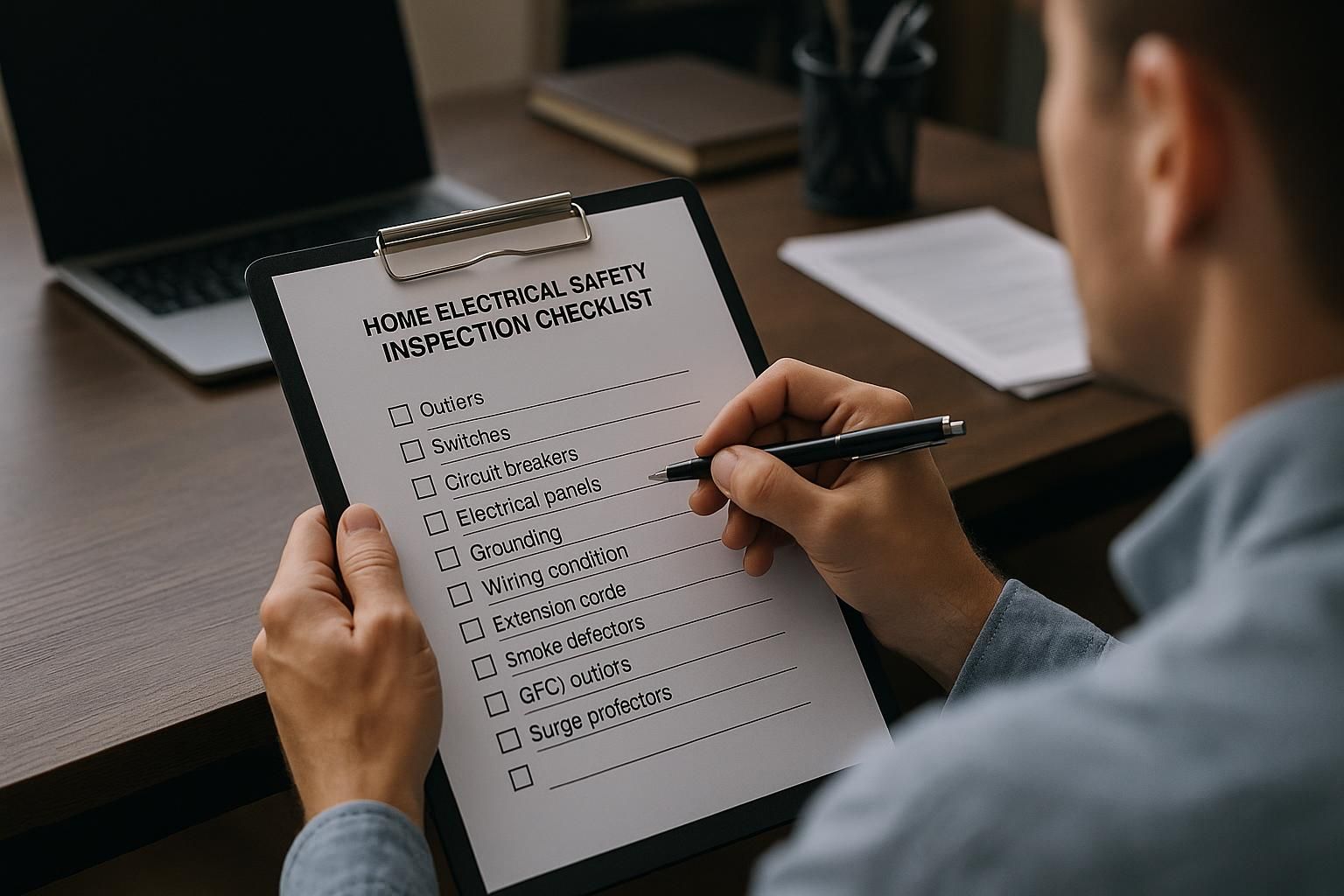
Home Electrical Safety Inspection Checklist: Smyrna & Wilmington Guide
Electrical safety is paramount for protecting your home and family. A routine inspection can identify hazards before they become serious. For homes in Smyrna, Wilmington, and across New Castle County, this home electrical safety inspection checklist is a great start.
- Outlets & Switches: Check for warmth or discoloration. Test GFCI outlets in kitchens, bathrooms, and outdoors, understanding what GFCI outlets are and how they work.
- Cords & Plugs: Inspect for fraying. Avoid overloading outlets or excessive extension cord use.
- Electrical Panel: Look for rust, scorch marks, or burning odors. Frequent breaker trips demand a professional check. A thorough electrical panel safety inspection checklist can provide more detail.
- Lighting: Notice flickering lights or fast-burning bulbs? Use correct wattage for fixtures.
- Smoke & CO Detectors: Test these critical safety devices monthly for proper function.
This checklist helps with basic observations. For a thorough assessment or if concerns arise, consider an expert evaluation. Contact Conductive Electrical Contracting for reliable electrical safety services.
Understanding Common Electrical Hazards in New Castle & Kent Counties
Electrical safety is paramount for any homeowner, but understanding the specific hazards common to our communities in New Castle and Kent Counties can help you stay one step ahead. From the historic charm of Wilmington properties to the newer developments stretching across Smyrna, homes here face a variety of potential electrical pitfalls.
One frequent concern is outdated wiring. Many older homes in our service area may still rely on aluminum wiring, which was common decades ago but is now known to pose significant fire risks due to its tendency to oxidize and loosen connections. Are you sure your home isn’t hiding this silent hazard?
Another prevalent issue is overloaded circuits. With today’s abundance of electronics and appliances, it’s easy to demand more power than your home’s electrical system was designed to provide. This can lead to frequently tripped breakers, flickering lights, or even overheating, signaling a dangerous situation.
Then there are the dangers of improper installations or DIY electrical work gone wrong. While a quick fix might seem convenient, amateur electrical repairs can create serious shock hazards or fire risks. Always remember that electricity is not a hobby, but a complex system that requires professional expertise.
Identifying these and other potential problems is crucial for your family’s safety and your home’s longevity. If you suspect any electrical issues or simply want peace of mind, contact Conductive Electrical Contracting for an inspection. Our team is ready to help residents across Delaware ensure their homes are safe and up to code.
Step-by-Step Inspection Checklist
Ready to give your home’s electrical system a once-over? Performing a home electrical safety inspection checklist does not require an engineering degree. Instead, it is about being observant and knowing what common warning signs to spot. This actionable guide helps you systematically examine key areas of your home, ensuring everything from your outlets to your circuit breaker panel is operating safely.
1. Examine Outlets and Switches
- Visual Check: Look closely at all outlets and light switches. Do you see any discoloration, scorch marks, or cracks? Are plates loose or missing? These are red flags that could indicate overheating or damaged wiring.
- Functionality Test: Plug a lamp into various outlets to confirm they work. For switches, turn lights on and off. Any flickering, buzzing, or difficulty in operation? This might signal a deeper issue.
- Loose Outlets: Do plugs feel loose when inserted? A loose connection can cause arcing and heat buildup, a serious fire hazard.
2. Assess Extension Cords and Power Strips
- Proper Usage: Are you using extension cords permanently? They are for temporary use only. Are power strips daisy-chained (plugged into each other)? This is a definite no-no and can lead to dangerous overloads.
- Condition: Inspect cords for fraying, cuts, or pinched areas. Never run cords under rugs or furniture where they can be damaged or overheat.
- Appropriate Rating: Ensure cords and strips are rated for the appliances plugged into them. Heavy-duty appliances need heavy-duty cords.
3. Inspect Appliance Cords
- Damage Check: Take a moment to look at the cords on your major appliances, like refrigerators, washers, dryers, and microwaves. Are they cracked, frayed, or chewed? Even minor damage can expose live wires.
- Proper Placement: Are cords pinched behind furniture or under heavy items? This can damage the insulation and lead to a short circuit.
4. Test Ground Fault Circuit Interrupter (GFCI) Outlets
These crucial safety devices cut power instantly to prevent electrocution, especially in areas where water is present. Think kitchens, bathrooms, laundry rooms, garages, and outdoors. Whether you are in a cozy row home in Wilmington or a spacious suburban house in Smyrna, GFCI protection is vital.

- How to Test: Locate the “Test” and “Reset” buttons on the outlet. Press “Test” and the power should cut off (the “Reset” button might pop out). Then press “Reset” to restore power. If it does not trip, or does not reset, the GFCI is faulty and needs replacement.
5. Check Smoke Detectors and Carbon Monoxide Alarms
While not strictly “electrical wiring,” these battery-powered or hardwired devices are essential for electrical fire safety. Have you tested them recently?
- Monthly Test: Press the “Test” button on each unit monthly. Replace batteries annually, or as recommended by the manufacturer.
- Placement: Ensure you have alarms on every level of your home, inside bedrooms, and outside sleeping areas.
6. Examine Your Electrical Panel (Breaker Box)
This is the heart of your home’s electrical system. Approach this with extreme caution. If anything looks amiss, call a professional immediately.
- Visual Cues: Look for any signs of rust, scorching, or strange odors around the panel. Are the circuit labels clear and accurate? Missing or illegible labels can be a safety hazard in an emergency.
- Tripped Breakers: While occasional trips happen, frequent breaker trips indicate an overload or a fault that needs attention.
Completing this home electrical safety inspection checklist can provide significant peace of mind for residents across New Castle County and Kent County. Remember, if you uncover any red flags or feel uncertain about any part of your electrical system, it is always best to contact Conductive Electrical Contracting for a professional assessment. Our family-owned business has over 20 years of experience ensuring electrical safety for homes like yours.
Preventative Maintenance & Best Practices
Proactive electrical maintenance is crucial for your home’s safety and system longevity. Just as you maintain your car, regular care for your electrical wiring and components prevents minor issues from escalating into dangerous, costly problems. A comprehensive home electrical safety inspection checklist is an invaluable tool for this.
Your DIY Safety Checks
- Test GFCI Outlets Monthly: Crucial in wet areas like kitchens and bathrooms, GFCI outlets prevent shocks. Press “Test,” then “Reset.” If it doesn’t trip, it needs replacing.
- Examine Cords and Plugs: Periodically inspect power cords for fraying, cracks, or damage. Never use compromised cords. Plugs should fit securely into outlets without heat or looseness.
- Prevent Circuit Overloads: Frequent tripped breakers signal an overloaded circuit, a significant fire hazard. Distribute high-wattage appliances across different circuits or consider a dedicated line.
When to Call an Expert
While homeowner checks are helpful, complex issues demand a professional. Older homes, common across New Castle County DE and Kent County DE, especially benefit from a thorough electrical safety inspection. A licensed electrician will identify hidden dangers, ensure compliance with current codes, and recommend essential upgrades. For residents in Smyrna DE or Wilmington DE seeking peace of mind, consider reaching out to Conductive Electrical Contracting for an expert assessment.
Hiring Conductive Electrical Contracting: What to Expect
You have diligently reviewed your home electrical safety inspection checklist, but sometimes a professional eye is invaluable. Electrical systems are complex, and subtle issues can pose significant risks. That is where a trusted, licensed electrician comes in.
When you choose Conductive Electrical Contracting for your home electrical safety inspection, you are choosing over two decades of family-owned expertise. We serve residents across Smyrna, DE, Wilmington, and surrounding New Castle County and Kent County communities. So, what happens during our visit?
Your Inspection Journey with Us
First, you will experience a friendly scheduling process. We understand your time is precious. Our licensed and insured electricians arrive punctually, ready to assess your home’s electrical health. We meticulously inspect key areas, from your electrical service panel and wiring to outlets, switches, and grounding systems. Think of it as a comprehensive health check for your home’s entire electrical network.
During the inspection, we prioritize clear communication. We explain any findings in plain language, avoiding jargon. Do you have old aluminum wiring? Are your GFCI outlets properly protecting wet areas? We will identify potential hazards, recommend necessary repairs or upgrades, and provide a detailed estimate. Our goal is always your peace of mind and the safety of your home. To schedule your thorough home electrical safety inspection, contact Conductive Electrical Contracting today.
Frequently Asked Questions
What are the most critical items to check during a home electrical safety inspection?
Focus on inspecting for frayed cords, overloaded outlets, and non-working GFCI outlets in moisture-prone areas like bathrooms and kitchens. Also, verify that your smoke and carbon monoxide detectors are operational and tested monthly.
How often should I conduct an electrical safety inspection in my home?
A comprehensive professional electrical safety inspection is recommended every 3-5 years, especially for homes in areas like Smyrna or Wilmington, DE, that may have older wiring. Annual visual checks by homeowners are also crucial for identifying immediate hazards.
Are there any common electrical hazards specific to older homes in Delaware?
Older homes throughout New Castle and Kent Counties often feature outdated wiring systems, such as aluminum wiring , which can present fire risks. Undersized or aging electrical panels that struggle to meet modern power demands are also prevalent issues.
Can I perform an electrical safety inspection myself, or should I hire a professional?
You can perform basic visual checks for obvious issues like damaged cords or warm outlets. However, for a thorough safety assessment that includes inspecting wiring, service panels, and grounding, it is always best to contact Conductive Electrical Contracting .
What should I do if I find an electrical problem during an inspection?
If you discover an electrical problem, such as flickering lights, frequently tripping breakers , or unusual burning smells, immediately turn off the power to that circuit at your service panel. Do not attempt DIY repairs; instead, promptly schedule an appointment with a licensed electrician.
How can I ensure my electrical panel is safe and up to code?
Regularly check your electrical panel for signs of rust, corrosion, or any unusual humming sounds. A professional electrician can assess if your panel requires a service panel upgrade , especially if you live in an older home in communities around Wilmington or Smyrna, DE, and ensure it meets current safety standards.
Conclusion
Leverage Conductive Electrical Contracting’s 20+ years of local experience to tailor each inspection step to Delaware’s building codes and common regional issues.
About the Author
Jeff King – Jeff King is the owner and lead electrician at Conductive Electrical Contracting, a family-owned Delaware electrical contractor based in Smyrna with over 20 years of experience serving New Castle, Kent, and Cecil counties.