Thousands of homes go up in flames every year because of a box most people never think about. Electrical distribution causes 31,650 home fires annually, resulting in 430 deaths and $1.6 billion in property damage. That number is staggering, and the hardest part is that most of those fires are preventable. A routine electrical panel inspection is one of the simplest, most cost-effective ways to protect your home, your family, and your insurance coverage. This guide breaks down the real risks hiding in your panel, how inspections reduce those risks, what Delaware homeowners need to know about local codes, and what a professional electrician actually does when they open that box.
Table of Contents
- The hidden risks in your electrical panel
- How inspections dramatically reduce fire and insurance risks
- Delaware-specific codes, upgrades, and when to schedule an inspection
- What actually happens during a professional inspection?
- Our approach: Why regular panel inspections are non-negotiable regardless of your panel’s age
- Schedule your electrical panel inspection with Delaware’s trusted experts
- Frequently asked questions
Key Takeaways
| Point | Details |
|---|---|
| Inspections drastically reduce risk | Routine professional inspections can lower fire and property loss risk by up to 75 percent. |
| Old panels jeopardize insurance | Insurers often deny claims for damage linked to outdated or hazardous electrical panels. |
| Delaware has strict code triggers | Adding high-power appliances or remodeling may require inspections and upgrades to meet state code. |
| DIY checks aren’t enough | Only licensed electricians can safely uncover all panel hazards, not visible during a visual check. |
| Inspections are a proactive investment | Regular inspections help avoid surprise repair bills and may qualify you for insurance savings. |
The hidden risks in your electrical panel
Your electrical panel is the heart of your home’s power system. When it works quietly in the background, it’s easy to assume everything is fine. But panels fail silently. Overloaded circuits, corroded bus bars, and loose connections don’t announce themselves before they spark.
Faulty wiring causes 51% of residential electrical fires, and a large portion of those incidents trace back to aging or defective panels. Two brands, in particular, are responsible for a disproportionate share of incidents: Federal Pacific Electric (FPE) and Zinsco. FPE Stab-Lok breakers are notorious for failing to trip under overload conditions, which means they don’t stop the flow of electricity when they’re supposed to. That’s not a quirk. That’s a fire waiting to happen. These panels were installed in millions of American homes between the 1950s and 1980s, and many are still in service today.
Learning about common wiring problems in older homes helps put the scope of this issue in context. Wiring and panel issues rarely look dramatic until it’s too late.
| Risk factor | Estimated impact | Reduction with inspection |
|---|---|---|
| Faulty wiring fires | 51% of residential electrical fires | Up to 75% reduction |
| FPE/Zinsco panel failures | Millions of at-risk homes in the U.S. | Identified and replaced |
| Overloaded circuits | Leading cause of breaker and wire damage | Caught before failure |
| Corrosion and arcing | Silent, invisible, highly dangerous | Detected by internal check |
You can also review a full electrical panel upgrades guide to understand what red flags look like and when a full replacement is warranted.
“The danger with failing panels isn’t that the lights go out. It’s that nothing seems wrong until the walls are on fire.”
Watch for these warning signs that your panel may already be in trouble:
- Breakers that trip repeatedly or won’t reset
- A burning smell near the panel or outlets
- Lights that flicker or dim unexpectedly
- Warm or discolored panel cover
- Audible buzzing or crackling from the box
- A panel brand that reads Federal Pacific, Zinsco, or Pushmatic
Any one of these symptoms is a reason to call a licensed electrician. All of them together is an emergency.
How inspections dramatically reduce fire and insurance risks
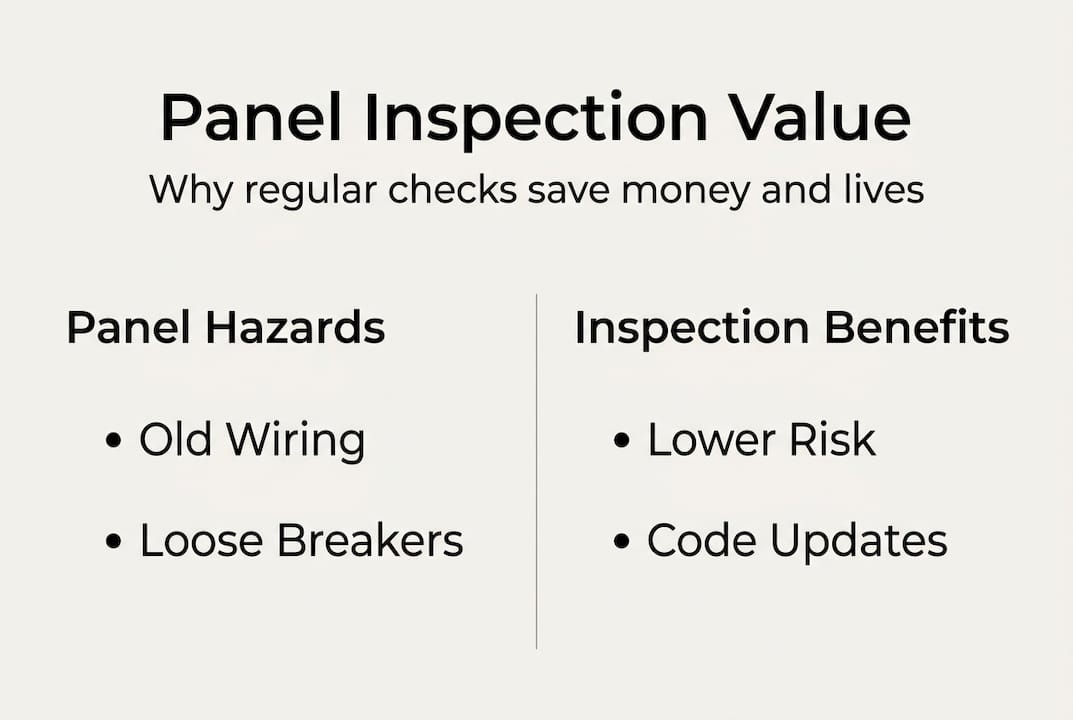
Routine inspections aren’t just about peace of mind. They’re a measurable safety intervention. The data is clear: regular inspections reduce fire risk by as much as 75%. That’s not a small margin. That’s the difference between a close call and a catastrophe.
Beyond fire safety, inspections have a direct impact on your insurance coverage. Many homeowners don’t realize that their insurer can deny a claim if the damage is traced to a hazardous or obsolete panel. Insurance often denies coverage for homes with FPE or Zinsco panels, and some companies refuse to write new policies on properties with these systems at all.
| Scenario | Without inspection | With inspection |
|---|---|---|
| Fire risk | Elevated, undetected faults | Up to 75% lower |
| Insurance claim outcome | Possible denial due to known hazards | Supported by documented compliance |
| Policy eligibility | At risk with outdated panels | Protected with compliant system |
| Hidden fault detection | Faults grow undetected | Caught and corrected early |
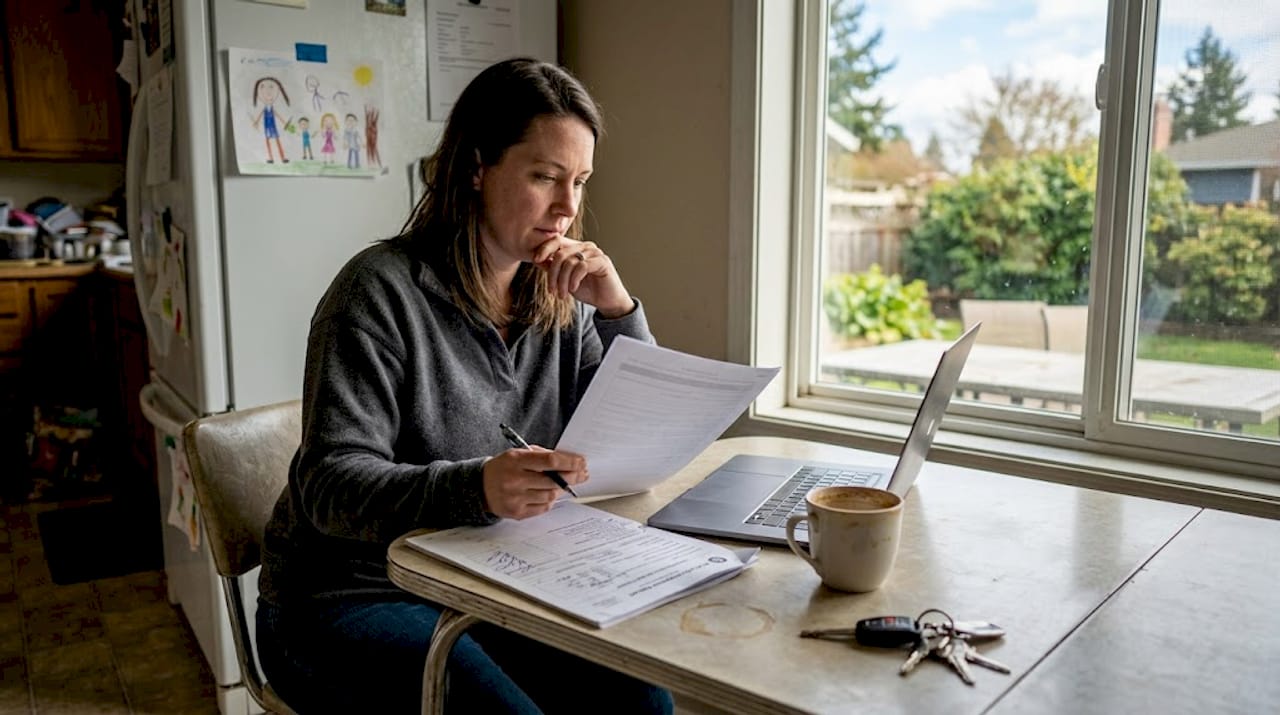
Knowing when to upgrade your panel often becomes clear during or after a professional inspection. Electricians don’t just look for fires waiting to happen. They assess whether your panel has the capacity to handle your current and future electrical load. Adding a home office, a hot tub, or even a large kitchen appliance can push an older panel past its design limits.
For homes with tankless water heaters, panel upgrades for water heaters are often required to support the increased demand safely.
Pro Tip: Schedule a professional electrical panel inspection every 3 to 5 years, even if nothing seems wrong. Most serious faults give no visible warning signs until they’ve already caused damage.
You can also use our panel inspection checklist as a starting point to understand what a thorough review covers before you book your appointment.
Delaware-specific codes, upgrades, and when to schedule an inspection
Delaware homeowners face some unique pressures when it comes to electrical systems. The state’s humid climate accelerates corrosion inside panels and wiring, which shortens equipment life and raises failure risk faster than in drier climates. That’s one reason upgrades are needed for high-demand additions like EV chargers and central air conditioning units in Delaware’s climate, and why the 3 to 5 year inspection window matters here more than in many other states.
Delaware also follows the National Electrical Code (NEC), with local amendments enforced by county inspectors. When you add a high-demand appliance or complete a significant renovation, a permit and inspection are typically required. For example, code requirements for AC units include proper disconnect switches and dedicated circuits, both of which need to be verified by an inspector.
Here’s when you should schedule an electrical panel inspection without waiting:
- Before listing your home for sale
- After purchasing a home built before 1990
- Before or after a major renovation or addition
- When adding high-powered appliances like EV chargers, HVAC systems, or hot tubs
- When your insurance company requests documentation of panel condition
- If your panel hasn’t been inspected in more than 5 years
Code red flags that Delaware homeowners often overlook:
- Double-tapped breakers (two wires on one breaker terminal)
- Undersized panels (below 100 amps for modern household loads)
- Missing breaker slots covered with tape or cardboard
- Aluminum branch circuit wiring without proper connections
- No ground fault or arc fault protection in required areas
Pro Tip: Don’t assume your panel is safe just because it passed inspection when the house was built. “Grandfathered” doesn’t mean insurable. Your provider can still deny coverage if your panel is deemed hazardous.
Review your Delaware inspection checklist and talk to your contractor about service panel upgrade options that meet current code requirements.
What actually happens during a professional inspection?
A lot of homeowners assume a panel inspection means someone glances at the box, flips a few breakers, and writes a report. That’s not what a real inspection looks like. A licensed electrician goes well beyond what you can see from the outside.
Here’s what a thorough inspection actually includes:
- Visual assessment of the exterior panel cover and labeling
- Removal of the cover to inspect internal components
- Checking for proper wire sizing on each circuit
- Testing breakers for correct tripping function
- Inspecting for signs of overheating, arcing, or corrosion
- Confirming proper grounding and bonding
- Verifying AFCI and GFCI protection where required by code
- Documenting findings and recommending corrective action
Visible exterior checks are fine for homeowners doing a basic walkthrough, but they are insufficient compared to professional internal testing. Older panels may appear perfectly fine on the outside while the internal components are corroded, overloaded, or failing. A panel that’s been “grandfathered” under older code may still present serious insurance and safety risks.
You can use our DIY panel checklist to monitor your panel between professional visits, but it’s not a substitute for a licensed electrician opening the box.
“What I find most often behind a panel cover is the opposite of what the homeowner expected. A clean exterior hides burnt wires, loose lugs, and overloaded neutrals. You simply can’t see those risks without removing the cover and using the right equipment.”
After the inspection, you should receive a written report that lists every finding, flags code violations, and outlines recommended repairs or upgrades. If your electrician can’t provide that, ask for one. It’s the document your insurance company may need, and it protects you if questions arise during a home sale. For a look at what professional panel repair involves after an inspection, you’ll find that addressing problems early is always less expensive than emergency repairs.
Our approach: Why regular panel inspections are non-negotiable regardless of your panel’s age
After more than 20 years working inside Delaware homes and businesses, we’ve seen every version of “it looked fine” go sideways. Panels that passed visual checks with flying colors had internal arcing damage. Newer panels installed by previous owners had incorrect wire gauges on high-draw circuits. Homeowners who hadn’t had a problem in 15 years were one hot summer away from a very bad outcome.
Here’s the uncomfortable truth: the electrical system in your home is not static. It ages, it corrodes, it gets pushed harder as you add appliances and devices over time. A panel that was properly sized in 2005 may be dangerously overloaded in 2026. “Looks fine” is not a safety standard.
We also see a pattern with owners of newer panels who skip inspections because they assume modern equipment doesn’t fail. It does. Connection points loosen over time. Moisture finds its way into unexpected places in older construction. Load demands shift.
If you have common electrical safety questions about your system, that’s a signal worth acting on. Set a recurring calendar reminder right now for a panel inspection. Not after something trips. Not after you smell something. On a schedule, before anything goes wrong.
Schedule your electrical panel inspection with Delaware’s trusted experts
You’ve read the risks, you know the warning signs, and you understand what a real inspection involves. The next step is straightforward: get your panel checked by someone who knows Delaware codes, has seen every type of panel failure, and can give you a clear, honest assessment.
At Conductive Electrical Contracting, we provide code-compliant inspections, fast electrical repairs and troubleshooting, and full service panel upgrades across Delaware. Whether you need a routine check, a pre-sale inspection, or a full panel replacement, we bring over 20 years of licensed experience to every job. Start with our safety inspection checklist or contact us directly for a professional assessment. We also offer current coupons and specials, so reach out to ask about savings on your first service.
Frequently asked questions
How often should I inspect my electrical panel?
Professionals recommend inspecting your electrical panel every 3 to 5 years, or immediately after major renovations or when adding high-powered appliances like EV chargers or central air.
What are the signs I need an inspection or upgrade?
Signs include flickering lights, frequently tripped breakers, warm or discolored panel covers, and using an older brand like FPE or Zinsco. FPE Stab-Lok breakers fail to trip under overload conditions approximately 60% of the time, which makes them especially dangerous.
Will insurance cover damages if my panel is outdated?
Insurance often denies coverage for homes with hazardous or obsolete panels, especially FPE or Zinsco models, and some insurers won’t write new policies on those properties at all.
Can I check my panel myself or should I hire a pro?
While homeowners can spot some visible issues, only a licensed electrician can safely open the panel, test internal components, and diagnose hidden hazards like arcing, corrosion, or overloaded circuits.
Do panel inspections have to meet local Delaware codes?
Yes, inspections and any resulting upgrades must meet Delaware electrical codes and NEC requirements. Upgrades for high-demand appliances like EV chargers and HVAC systems require code-compliant panels and are subject to local permit and inspection approval.