Most Delaware homes built before the 1990s were wired for a simpler time. Back then, a household ran a few lights, a refrigerator, maybe a window AC unit. Today, that same house is expected to power EV chargers, smart home systems, multiple large appliances, and high-draw HVAC equipment. That gap between what your electrical system was designed for and what you’re actually running is where safety problems, tripped breakers, and fire hazards begin. This guide explains what a residential electrical upgrade involves, when Delaware homeowners need one, what the law requires, and how to get it done safely and affordably.
Table of Contents
- What is a residential electrical upgrade?
- When is an electrical upgrade needed in Delaware homes?
- Delaware permits, code requirements, and safety standards
- Who should do the work? Choosing a qualified Delaware electrician
- What most Delaware homeowners get wrong about electrical upgrades
- Get your Delaware electrical upgrade done right
- Frequently asked questions
Key Takeaways
| Point | Details |
|---|---|
| Upgrades defined clearly | A residential electrical upgrade usually involves replacing the main panel to boost modern capacity and safety. |
| Know Delaware rules | Permits, NEC code, and specific safety features like surge protection are required for compliance in Delaware. |
| DIY risks are high | Only licensed, insured Delaware electricians can perform upgrades legally and safely. |
| Don’t oversize panels | Proper NEC load calculations prevent wasteful upgrades and meet insurance/company inspection requirements. |
What is a residential electrical upgrade?
An electrical upgrade is not just swapping out an old breaker box. It’s a structured improvement to your home’s ability to receive, distribute, and safely manage electrical power. At its core, a residential electrical upgrade involves replacing or expanding the main service panel to increase capacity from outdated levels like 60 to 100 amps up to a modern 200 amps, improving safety, efficiency, and support for high-demand appliances.
Think of your electrical panel as the traffic controller for every circuit in your house. When the system is undersized, too many cars try to use too few lanes. Breakers trip. Outlets overheat. Worst case, wires arc and fires start.
Here’s what a typical upgrade includes:
- Replacing the main breaker panel with a larger, modern unit
- Upgrading the service entrance wires from the utility pole or underground feed
- Installing a new meter socket if the old one is damaged or undersized
- Adding a whole-home surge protector as now required by code
- Installing an exterior emergency disconnect switch
The most common reasons Delaware homeowners pursue an upgrade include adding an EV charger, installing central air conditioning, finishing a basement or garage, setting up a home office, or simply trying to get a home sale to pass inspection.
Here’s a quick comparison of what outdated versus modern service looks like:
| Feature | Outdated service (60-100A) | Modern service (200A) |
|---|---|---|
| Panel type | Fuse box or old breakers | Arc fault protected breakers |
| Surge protection | None | Whole-home surge device |
| EV charger support | No | Yes |
| Home sale readiness | Often flagged | Inspection-ready |
| Fire risk | Higher | Significantly reduced |
You can explore service panel upgrade basics to understand exactly what a modernized system looks like in practical terms. For a deeper breakdown of what qualifies as safe and current, the panel upgrade guide walks through the key criteria by home type and age.
The bottom line is this: upgrading your electrical system is one of the most impactful investments a homeowner can make, both for daily safety and long-term property value.
When is an electrical upgrade needed in Delaware homes?
Some upgrade triggers are obvious. Others sneak up on you. Either way, Delaware homeowners should know the full list because ignoring early warning signs costs far more than addressing them early.
Visible warning signs to watch for:
- Breakers that trip frequently, especially under normal loads
- Lights that flicker or dim when appliances kick on
- Outlets or switch plates that feel warm to the touch
- A burning smell near your electrical panel
- Scorch marks or discoloration around outlets or the breaker box
- A fuse box that still hasn’t been converted to circuit breakers
Beyond everyday warning signs, there are three edge cases in Delaware homes that demand immediate attention.
First, aluminum branch wiring. Homes built between 1965 and 1973 often have aluminum wiring in the branch circuits (the wires running to individual outlets and switches). This is a serious issue. Aluminum branch wiring creates a fire risk 55 times higher than copper wiring, according to the U.S. Consumer Product Safety Commission. Proper fixes include anti-oxidant compound, CO/ALR rated devices, or copper pigtailing at each connection point. You can learn more about the aluminum wiring replacement process and what it involves for your home.
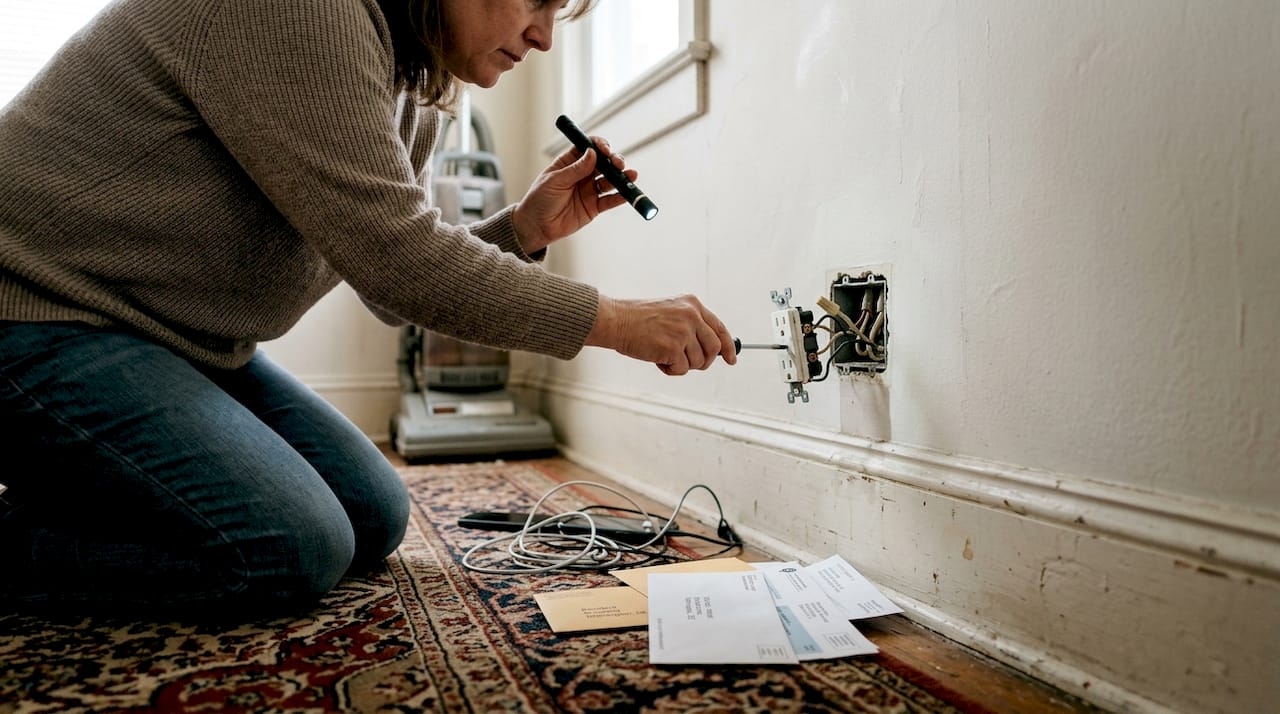
Second, recalled panel brands. Federal Pacific Electric (Stab-Lok) and Zinsco panels have well-documented failure histories. Many insurance companies in Delaware will deny coverage or refuse to renew policies on homes with these panels still installed. If your home has one, the recalled panel replacement guide explains what brands are affected and why replacement is non-negotiable.
Third, major life changes. Adding an HVAC system, finishing extra living space, or installing an EV charger can push an older panel beyond its safe operating limits fast.
Pro Tip: If you’re planning to sell your home, a pre-listing electrical inspection can identify panel issues before they derail your sale. Buyers and their lenders increasingly flag outdated or recalled panels during the purchase process.
Delaware permits, code requirements, and safety standards
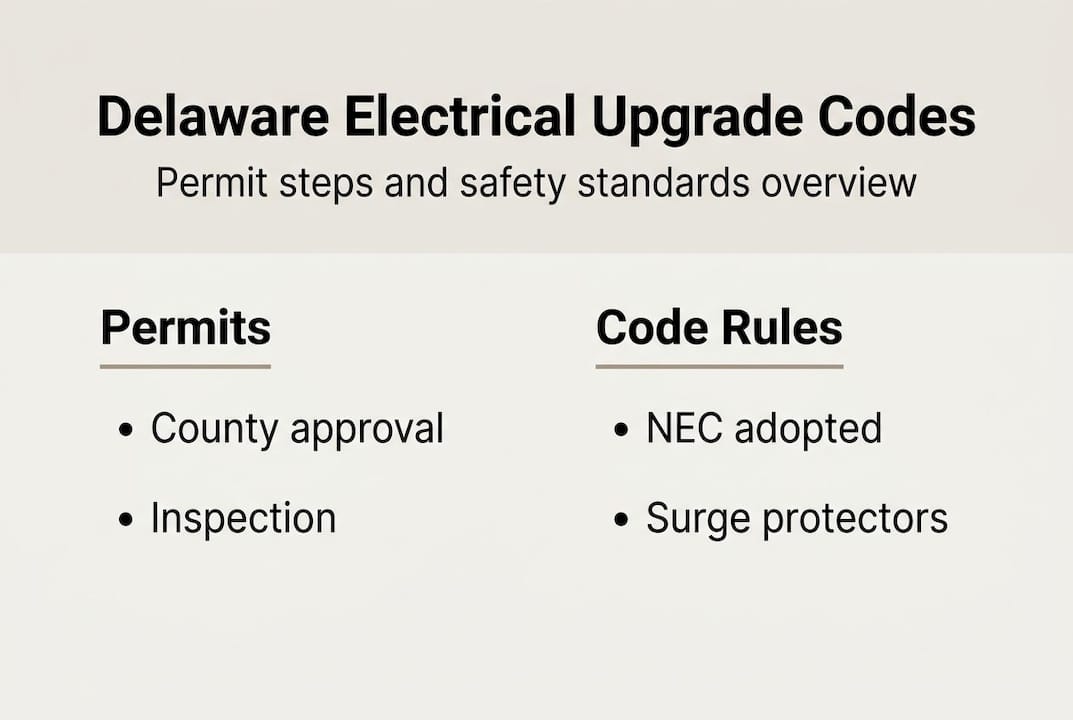
Skipping permits on an electrical upgrade is never worth it. In Delaware, every panel or service upgrade requires a county-issued permit, a licensed electrician to perform the work, and an inspection by a state-recognized agency before the power is restored. This applies whether you’re in New Castle, Kent, or Sussex County.
Here’s a quick overview of what the permit and inspection process looks like across Delaware’s three counties:
| County | Permit issuer | Inspection agency |
|---|---|---|
| New Castle | County Building Dept. | State-recognized inspector |
| Kent | County Building Dept. | State-recognized inspector |
| Sussex | County Building Dept. | State-recognized inspector |
Beyond the permit process, Delaware has adopted the National Electrical Code (NEC), and the Delaware upgrade requirements now include two mandatory additions for any new or replacement service: an exterior emergency disconnect and a whole-home surge protection device. These aren’t optional upgrades. They’re code. Reviewing the Dover 2026 standards gives you a sense of how current standards apply at the municipal level.
One important nuance: a panel swap and a full service upgrade are not the same thing. Some contractors only replace the breaker box, but wiring safety for upgrades points out that older Delaware homes often need the full service because of underground feeds or deteriorated entrance wires. If your panel is being relocated more than six feet from its original position, the NEC may also require AFCI and GFCI circuit protection throughout affected areas.
Pro Tip: Always ask your electrician whether your project requires a full service upgrade or just a panel replacement. The difference can affect your permit scope, your timeline, and your final cost.
For homes adding new circuits, the code now requires surge protection code rules compliance, which means a listed surge protective device (SPD) must be installed at the main panel.
Who should do the work? Choosing a qualified Delaware electrician
Here’s a fact that surprises some homeowners: performing your own main panel upgrade in Delaware is illegal. This is not a gray area. The state requires a licensed electrician for any service or panel work, and doing it yourself or hiring an unlicensed handyman can void your homeowner’s insurance, create liability in a sale, and put your family at real risk.
NEC load calculation rules make clear that oversizing your service panel is wasteful and unnecessary. Many homeowners assume bigger is always better, but a proper NEC load calculation tells you exactly what size service your home actually needs. Oversizing can complicate inspections and even raise red flags with insurance underwriters.
Here’s what to ask when vetting a Delaware electrician:
- Are you licensed by the State of Delaware? Ask for the license number and verify it.
- Do you carry liability insurance and workers’ comp? This protects you if something goes wrong.
- Do you pull permits for every job? Any contractor who discourages permitting is a red flag.
- Do you perform an NEC load calculation before sizing the panel? This separates the pros from the guessers.
- Do you have local references or reviews in Delaware? Experience in your county matters for permit processes.
Use the pick a qualified installer resource to understand what separates a reliable contractor from one who cuts corners. For a broader look at what to expect from top local professionals, the find top electricians Delaware guide breaks down what credentials and experience to prioritize.
“DIY electrical upgrades are illegal in Delaware and void homeowner’s insurance. Always use a licensed electrician with liability coverage.”
What most Delaware homeowners get wrong about electrical upgrades
After more than 20 years in Delaware homes, we’ve seen one mistake repeated constantly: homeowners focus entirely on the panel itself and ignore everything connected to it.
The panel is just one piece. The main service entrance wires, the meter socket, the grounding system, the surge protection device—these all work together. Replacing only the box while leaving aging entrance wires in place is like putting a new engine in a car with a cracked frame. You’ve addressed the symptom, not the system.
The second mistake is assuming bigger capacity is always smarter. A 400-amp panel in a 1,800 square foot home is usually overkill. It costs more, it can raise questions during inspections, and it doesn’t make your home safer. A proper NEC load calculation tells you exactly what your home requires. Start there.
Real confidence in your electrical system comes from a complete plan, not a fast panel swap. In-depth upgrade guidance can help you think through the full picture before you commit to any scope of work.
Get your Delaware electrical upgrade done right
If this guide has made one thing clear, it’s that a safe, lasting electrical upgrade is about more than just replacing a box. It takes permits, inspections, proper load calculations, and a licensed professional who knows Delaware’s specific requirements.
Conductive Electrical Contracting has served Delaware homeowners for over 20 years with fully permitted, code-compliant panel upgrade services and Delaware surge protection installations. We handle the permits, inspections, and utility coordination so you don’t have to. Whether you need a panel replacement, a full service upgrade, or just want a professional to assess your current system, we’re ready to help. Contact us today to request a free estimate and get a clear picture of what your home actually needs.
Frequently asked questions
How long does a residential electrical upgrade take in Delaware?
Most Delaware panel upgrades are completed in one day, but permitting and inspections can add up to a week depending on your county’s schedule.
Is a permit required for all electrical panel upgrades in Delaware?
Yes, every main panel or service upgrade in Delaware requires a county permit and must be completed by a licensed electrician before the inspection is scheduled.
What is the cost range for a typical electrical panel upgrade in Delaware?
The average cost runs $2,000 to $4,000, depending on home size, panel location, and whether a full service upgrade is required in addition to the panel itself.
What are the risks of not upgrading an old or recalled electrical panel?
Outdated or recalled panels can raise fire risk significantly, void your homeowner’s insurance, and create shock or power failure hazards that worsen over time.
How do I check if I have aluminum wiring or a recalled panel?
A licensed electrician can inspect your panel and wiring for aluminum conductors or unsafe manufacturers like Federal Pacific and Zinsco during a straightforward safety assessment.