Thinking about swapping out that old breaker yourself or calling a buddy who “knows about electrical stuff”? That instinct to save money up front is understandable, but it can set you up for consequences far more expensive than the original repair. Regulations around electrical work in Delaware are shifting, and what was once considered a gray area for low-voltage work may soon fall under stricter licensing rules. For Wilmington homeowners and small business owners, the safest and smartest move is hiring a licensed, insured professional every time.
Table of Contents
- What makes a professional electrician essential?
- Safety and code compliance: A local legal checklist
- Risks of unlicensed or DIY electrical work
- How to verify an electrician’s credentials and track record
- Why the easy option can be the riskiest: Lessons from Wilmington
- Next steps: Booking a qualified Wilmington electrician
- Frequently asked questions
Key Takeaways
| Point | Details |
|---|---|
| Credentials matter | Licensed electricians ensure safety, compliance, and reliable repairs. |
| Regulations evolve | Local laws and exemptions change; verify requirements for every project. |
| DIY risks are real | Unlicensed work increases fire risks and may void insurance. |
| Verification is critical | Check every electrician’s license, insurance, and code-compliance guarantee before hiring. |
| Investing wisely pays off | Professional work up front saves money, avoids fines, and protects property value. |
What makes a professional electrician essential?
The gap between a licensed electrician and an unlicensed handyman is not just a piece of paper on a wall. It represents hundreds of hours of formal training, hands-on apprenticeship, and tested knowledge of electrical systems that can injure or kill when handled wrong. Licensed electricians understand voltage, load balancing, grounding, and the National Electrical Code (NEC), which is the standard rulebook for all electrical installations in the U.S. They apply that knowledge every single day on real jobs.
Here is what a licensed professional brings to your project that an unlicensed contractor simply cannot:
- Code-compliant installations that satisfy local inspectors and keep your property insurable
- Proper permits pulled before work begins, protecting you from fines during future home sales or inspections
- Liability insurance that covers damage if something goes wrong on the job
- Warranty on labor so you are not paying twice if an issue reappears
- Knowledge of local Wilmington requirements, which can differ slightly from state minimums
Understanding Wilmington electrician essentials goes a long way toward helping you ask the right questions before any work starts. One of the most important is simply: “Can I see your license and proof of insurance?” Any professional worth hiring will hand those documents over without hesitation.
“A qualified electrician should follow a code-compliant workflow that includes permits and inspections for relevant work.” — how to choose the right electrician for your home or business
When you book local electrical services through a reputable contractor, that workflow is built into every job. You get documentation, not guesswork. And before you sign any contract, reviewing contractor selection basics can help you avoid the most common hiring mistakes homeowners make.
Pro Tip: Always ask for the contractor’s state license number and verify it online through Delaware’s licensing portal before work begins. This takes two minutes and can save you thousands.
Safety and code compliance: A local legal checklist
Understanding credentials is crucial. Now let’s look at how legal requirements work locally and ensure your project checks all the boxes for safety and compliance.
Delaware has specific electrical licensing requirements, and not every project is treated the same under the law. Some low-voltage tasks, such as installing a doorbell or a simple data cable, may currently be exempt from requiring a licensed electrician. However, proposed regulatory changes in Delaware could significantly expand what counts as licensed-required work, so checking the current rules before your project starts is essential. What’s exempt today may not be exempt next year.
Here is a practical numbered checklist to keep your project on the right side of the law:
- Confirm the scope of your project and whether it involves line-voltage (120V/240V) or low-voltage systems
- Call the Delaware Division of Professional Regulation or check their website to verify current licensing requirements for your specific task
- Hire a licensed electrician for all line-voltage work, panel work, new circuits, or anything that requires a permit
- Apply for the required permit before work begins, not after
- Schedule a post-installation inspection with your local authority having jurisdiction (AHJ)
- Keep all documentation including permits, inspection reports, and contractor licenses for your records
| Project type | Licensed electrician required? | Permit typically needed? |
|---|---|---|
| Panel upgrade or replacement | Yes | Yes |
| New circuit installation | Yes | Yes |
| GFCI outlet replacement | Recommended | Sometimes |
| Doorbell or low-voltage wiring | Check current rules | Usually not |
| EV charger installation | Yes | Yes |
| Ceiling fan installation | Recommended | Sometimes |
| Generator hookup | Yes | Yes |
Electrical fires are a serious concern. Faulty wiring and improper installations are among the leading causes of residential fires nationwide, which is why code compliance exists in the first place. Your Delaware electrical repair guide can walk you through the specific expectations for common repair and upgrade projects in this state.
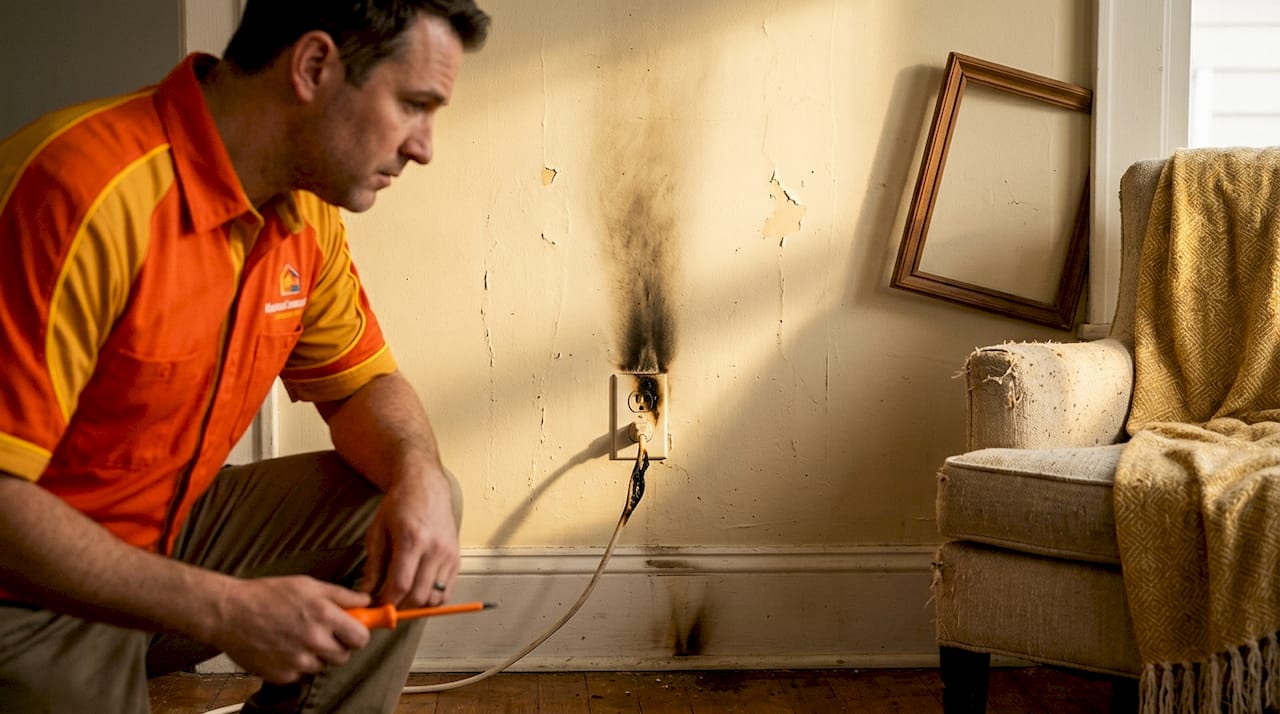
Following a clear code compliance workflow makes every project cleaner and safer. And if you want to know what inspectors look for before they sign off, reviewing an inspection checklist ahead of time is a smart move. It also helps to understand common electrical issues like GFCI troubleshooting, since GFCI failures are one of the most frequently flagged issues during inspections.
Risks of unlicensed or DIY electrical work
Now that you know compliance steps, let’s consider what can go wrong if proper legal or safety procedures are skipped.
The dangers of DIY electrical work go beyond a blown fuse. We are talking about fire, electrocution, property damage, and insurance denial. These are not scare tactics. They are documented, real outcomes that happen to well-intentioned homeowners every year. The problems with DIY electrical work are often invisible. A wire connected just slightly wrong might pass visual inspection but overheat slowly over months until it causes a fire inside a wall where no one can see it.
Here is a clear list of risks you take on when using an unlicensed contractor or doing the work yourself:
- Fire hazards from improper wire connections, overloaded circuits, or wrong breaker sizing
- Electrocution risk when working without proper safety equipment or knowledge of live circuits
- Insurance claim denial if your insurer discovers non-code-compliant work contributed to a loss
- Failed home inspections when selling your property, requiring expensive corrective work
- Fines and stop-work orders from local code enforcement if unlicensed work is discovered
- Voided warranties on appliances or systems that require professional installation
Electrical malfunctions are responsible for an estimated 51,000 home fires each year in the United States, resulting in nearly 500 deaths, more than 1,400 injuries, and $1.3 billion in property damage.
The insurance angle deserves special attention. Most homeowners’ policies contain language that excludes coverage for damage resulting from work that did not meet local building codes or was performed without required permits. If a fire breaks out and the investigation reveals unlicensed wiring, you could face a denied claim on a six-figure loss. That is a steep price for trying to save a few hundred dollars on an electrical repair.
Even for low-voltage work, the regulatory landscape in Delaware is evolving. What falls outside licensing requirements today might be included in future mandates. Staying informed protects you.
Pro Tip: Even something as simple as adding an outlet for a new appliance can trigger code requirements for arc-fault circuit interrupters (AFCIs) in certain rooms. Always verify with a licensed electrician before assuming a small upgrade is straightforward.
Seasonal projects carry extra risk too. Check out these holiday electrical safety tips for a look at how easily small mistakes during decorating or temporary setups can lead to dangerous situations. And for a broader perspective on what professional electricians manage in residential settings, this electrician safety insight resource covers the complexity of the work involved.
How to verify an electrician’s credentials and track record
Knowing the risks, let’s close with a practical guide to making sure you hire the right electrician for reliable, safe work every time.
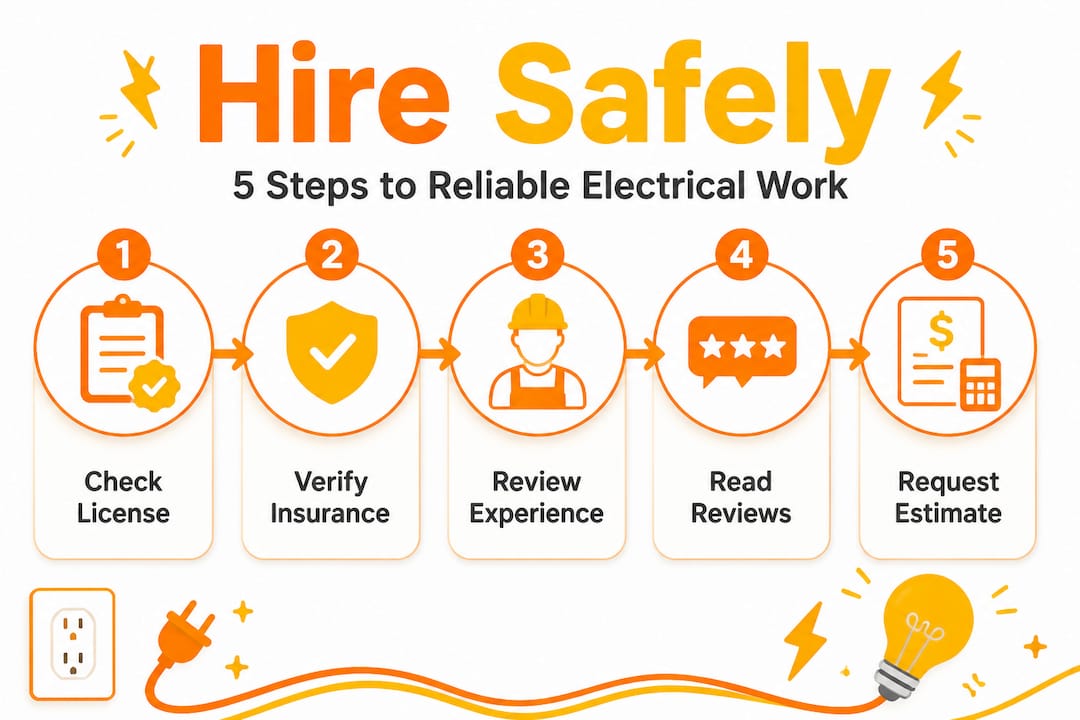
Choosing the right electrician is not just about finding the cheapest quote. It is about finding someone with a documented record of safe, compliant, and high-quality work. The process of verifying an electrician’s credentials does not have to be complicated, but it does have to happen before any work begins.
Follow this numbered checklist when evaluating any electrical contractor:
- Request the license number and verify it through Delaware’s Division of Professional Regulation
- Ask for proof of general liability insurance and worker’s compensation coverage
- Check online reviews on Google, Yelp, or the Better Business Bureau for consistent patterns
- Get a written estimate that includes labor, materials, permit fees, and a project timeline
- Ask specifically about code compliance and whether a permit is needed for your project
- Confirm a written warranty on labor for at least one year after project completion
| Credential or service | What to look for |
|---|---|
| State electrical license | Active, current license from Delaware DPR |
| General liability insurance | Minimum $1 million in coverage |
| Workers’ compensation | Required if contractor has employees |
| Permit handling | Contractor pulls permits on your behalf |
| Labor warranty | Written, minimum 1 year |
| References or reviews | 4+ star average with recent reviews |
Watch out for these red flags before signing anything:
- Quote far below market rate, which often means corners will be cut on materials or labor
- No written estimate or contract, leaving you unprotected if disputes arise
- Vague licensing answers like “I’ve been doing this for years” instead of providing a license number
- Pressure to skip the permit to “save money” or finish faster
- No business address or local presence, making it difficult to follow up on warranty issues
If you want to know which areas a contractor covers, reviewing their service locations page tells you whether they have established roots in your community. Local contractors have more accountability because their reputation depends on neighbors talking to neighbors. For projects involving wiring upgrades, residential wiring upgrades provide a solid baseline for what a reputable contractor should offer and how the process typically works. Professionals also use organized systems tracked through electrician software tools to manage scheduling, permits, and documentation, which is another sign of a legitimate, well-run operation.
Why the easy option can be the riskiest: Lessons from Wilmington
Here is something most electrical articles will not say directly: the instinct to save money on electrical work is one of the most expensive instincts a homeowner can act on. We have seen it play out repeatedly in Wilmington. A homeowner hires someone off an online classifieds site to upgrade their panel. The price is attractive. The work looks fine to the untrained eye. Then, six months later, the breakers trip constantly, a home inspection before a sale reveals unpermitted work, and the buyer walks away. The homeowner is now facing a full panel redo, permit fees, and inspection costs, all to correct what should have been done right the first time.
Another scenario we encounter: a small business owner decides to handle their own wiring for a new piece of equipment. No permit, no inspection. When a minor electrical fault causes property damage, the insurance company investigates and finds the unpermitted work. The claim is denied. The cost of that “saved” electrician bill ends up being multiplied many times over.
Choosing a professional electrician from the start, one with a license, insurance, and a track record in Wilmington, is not a luxury. It is the decision that protects your investment, your family, and your business. The upfront cost of licensed work is always lower than the downstream cost of fixing unlicensed work.
The Wilmington electrical services that legitimate contractors provide are built on accountability. When something is permitted and inspected, there is a paper trail. That paper trail protects you when you sell your property, file an insurance claim, or deal with a code enforcement issue.
Pro Tip: Code-compliant work is not just about following rules. It directly protects your property value. Buyers and their inspectors look for unpermitted work, and finding it can derail a sale entirely.
Next steps: Booking a qualified Wilmington electrician
If everything you have read here has made one thing clear, it is this: reliable electrical work is not a place to cut corners. Finding a qualified professional in Wilmington does not have to be stressful when you know where to look.
At Conductive Electrical Contracting, we bring more than 20 years of experience to every job in Wilmington and surrounding Delaware communities. Whether you need electrical repairs handled quickly and safely, want to explore our current electrical specials to reduce your project cost, or need safe installation services for a panel upgrade, new circuits, or a generator hookup, we are ready to help. Every job comes with full licensing, insurance, and a commitment to code-compliant results. Contact us today for a free estimate and experience what it feels like to hire an electrician you can actually trust.
Frequently asked questions
Are all electrical projects in Delaware required to use a licensed electrician?
No, some low-voltage systems may currently be exempt under Delaware rules, but proposed regulatory changes could expand which tasks require licensing, so always confirm the current rules for your specific project before starting.
How can I tell if an electrician is qualified and licensed?
Ask for their license number, verify it through Delaware’s licensing portal, and request proof of insurance. You can also check local reviews and credentials to confirm their track record with real customers.
Can DIY electrical work void my homeowners’ insurance?
Yes, most policies exclude coverage for damage linked to work that did not meet local codes. Checking whether your project falls under current exemptions or requires a licensed electrician is essential before you start any project.
What’s the first step to hiring a safe, code-compliant electrician?
Start by requesting proof of licensing and insurance, then ask for a written estimate that includes permit handling. Following the criteria for choosing a professional protects you from the most common and costly hiring mistakes homeowners make.
Recommended
- Need Appliance Repair? Hire a Wilmington Electrician in 2025
- Electrical Repairs & Troubleshooting by Conductive Electric
- Safe Electrical Repairs & Installation Service
- Why Electricians Are Essential for Safe Renovations
- Understanding domestic electricians: roles & safety in UK homes
- Electrical Home Inspection: Red Flags in Older Chicago Homes