That gray metal box in your basement or utility room is not just a place to reset tripped breakers on a Sunday morning. It is the nerve center of every circuit in your home or business, quietly managing the flow of electricity to your lights, appliances, HVAC system, and everything in between. Most Delaware homeowners never think about it until something goes wrong. But understanding how your electrical panel works, when it needs attention, and what code requires can save you from costly repairs, failed inspections, and serious safety hazards.
Table of Contents
- What is an electrical panel and why does it matter?
- The heart of your electrical system: Main panels vs. subpanels
- Essential safety standards: Panel placement and clearance requirements
- When and why to upgrade your panel: Power needs and safety risks
- Why panel upgrades are the cornerstone of future-proof safety (and what most people miss)
- Get expert help with panel upgrades, repairs, and safety inspections
- Frequently asked questions
Key Takeaways
| Point | Details |
|---|---|
| Central power distribution | Your electrical panel is the hub that routes power safely to every circuit in your home or business. |
| Safety and code compliance | Correct panel installation and maintenance reduce fire risks and ensure emergency access. |
| Upgrade when needs change | Always upgrade your panel if you add high-powered equipment or see warning signs like frequent breaker trips. |
| Main vs. subpanel setup | Proper bonding and separation of neutral and ground depend on panel type for safe operation. |
| Professional help matters | Licensed electricians ensure your panel meets today’s safety standards and prepares you for future needs. |
What is an electrical panel and why does it matter?
Your electrical panel is far more than a box of switches. As defined by electrical experts, “the electrical panel is the central distribution point that takes utility power and divides it into individual protected branch circuits.” In plain terms, it takes the large feed of electricity coming from your utility company and splits it into smaller, safer portions that power each room, appliance, or system in your building.
Inside the panel, you will find three key components working together:
| Component | Function |
|---|---|
| Main breaker | Controls all power entering the panel; shuts everything off in an emergency |
| Circuit breakers | Protect individual circuits; trip when current exceeds safe limits |
| Bus bars | Metal bars that distribute power from the main breaker to individual breakers |
| Neutral bar | Returns current safely back to the utility source |
| Ground bar | Provides a fault path to protect against shock and fire |
When a circuit is overloaded, say you plug too many high-draw appliances into the same circuit, the breaker trips to prevent overheating and potential fire. That is the system working correctly. But when panels are outdated, undersized, or improperly wired, the protection fails silently. Wires overheat without tripping a breaker. Connections corrode. And the risk of an electrical fire grows without any obvious warning sign.
You can see real-world examples of what proper and improper panels look like by reviewing electrical panel inspection photos from professional inspectors. The difference between a well-maintained panel and a neglected one is striking.
If your panel is already showing signs of trouble, electrical panel repair in Delaware is available from licensed contractors who know local code requirements and can identify problems before they escalate.
The heart of your electrical system: Main panels vs. subpanels
Not every property runs on a single panel. Many Delaware homes with detached garages, finished basements, home additions, or workshops use a combination of a main service panel and one or more subpanels. Understanding the difference matters because mixing up the rules between them is one of the most dangerous electrical mistakes a property owner or unqualified installer can make.
The main service panel is where your utility power enters the building. It is the only location where the neutral conductor and the equipment grounding system are intentionally connected together. This connection is called the main bonding jumper. According to panel fundamentals guidance, “in a main service panel, the neutral (grounded conductor) and equipment grounding system are bonded together at one location (main bonding jumper); in subpanels, the neutral and ground must be separated.” If someone bonds them together in a subpanel, it creates a parallel return path for current that can energize metal surfaces throughout your building, creating a serious shock and fire hazard.
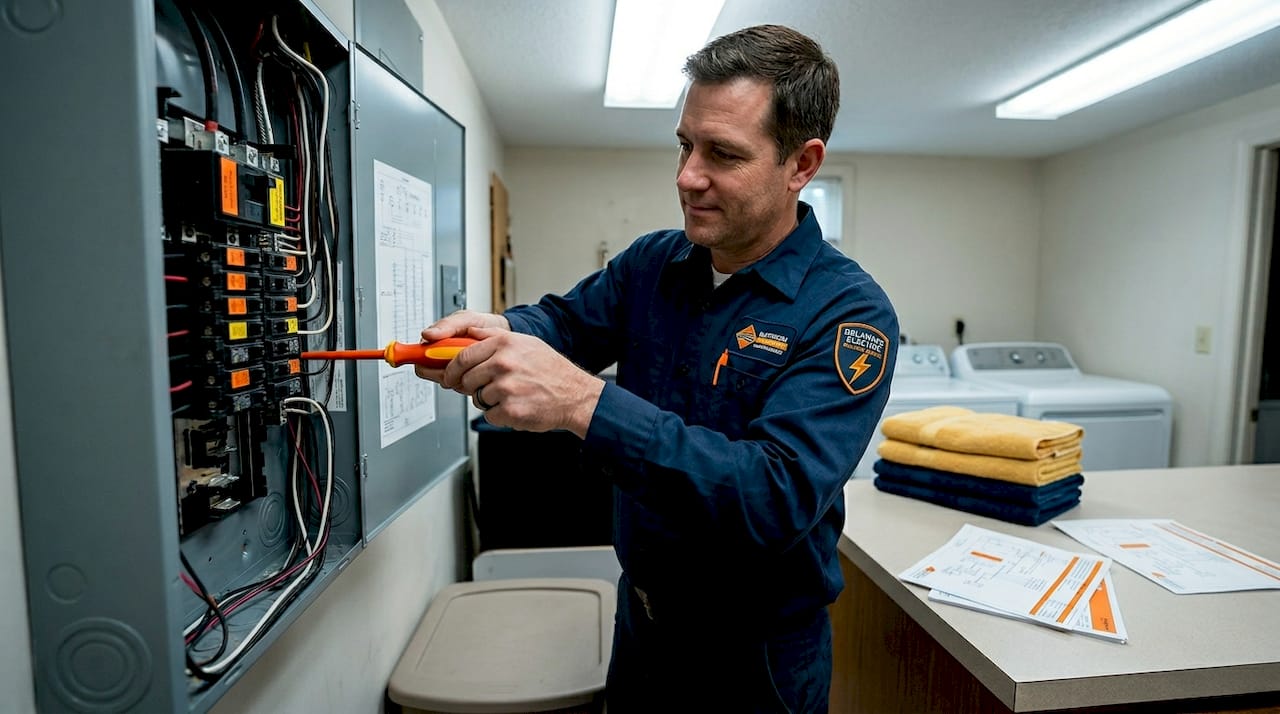
Here is a quick comparison to keep things clear:
| Feature | Main panel | Subpanel |
|---|---|---|
| Utility feed | Direct from meter | Fed from main panel |
| Neutral/ground bonding | Required (main bonding jumper) | Strictly prohibited |
| Disconnect | Main breaker in panel | Breaker in main panel |
| Grounding electrode | Required | Not required (uses main) |
| Consequences if wrong | Overcurrent risk | Shock hazard, fire risk |
You need a subpanel when a specific area of your property requires more circuits than practical to run from the main panel. Common situations include:
- Adding a detached garage with lighting, outlets, and power tools
- Finishing a basement with a home theater, office, or gym
- Installing an EV charger in a location far from the main panel
- Building a home addition with a kitchen or bathroom
- Setting up a workshop with heavy equipment loads
Pro Tip: When adding a subpanel, always size it larger than your current needs. A 60-amp subpanel might cover today’s garage, but if you add an EV charger or a mini-split system later, you will wish you had installed 100 amps from the start.
Understanding GFCI outlet safety is also critical when designing circuits fed from either panel type, especially in kitchens, bathrooms, and outdoor areas.
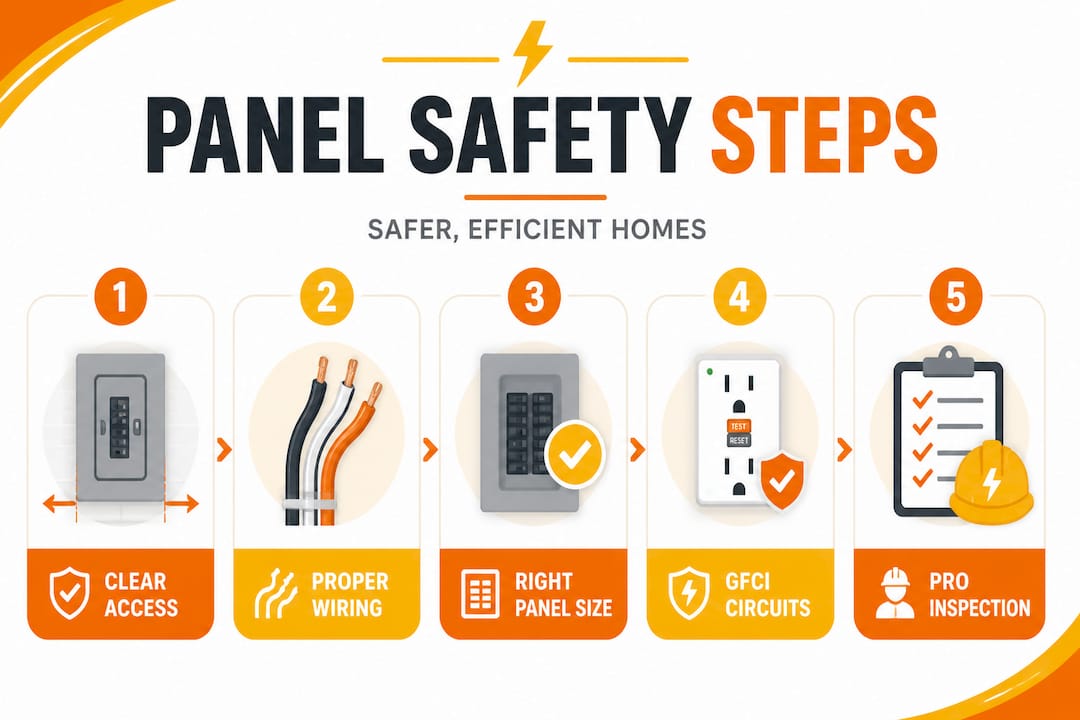
For a thorough look at what safe panel upgrades involve, the panel upgrades safety guide covers everything from planning to final inspection. And if you are wondering whether your current setup puts your family at risk, reviewing panel upgrade for home safety can help you make that call with confidence.
Essential safety standards: Panel placement and clearance requirements
Where your panel is installed matters just as much as how it is wired. The National Electrical Code (NEC) sets specific requirements for working space around electrical panels, and these rules exist for one reason: to protect people. NEC clearance requirements state that “clearances around the electrical panel are safety-critical: NEC requires a clear working space in front of the panel and dictates minimum dimensions and accessibility.”
Specifically, the NEC requires:
| Requirement | Minimum standard |
|---|---|
| Width of clear working space | 30 inches |
| Height of clear working space | 78 inches (6.5 feet) |
| Depth in front of panel | 36 inches (for 120/240V systems) |
| Headroom | 6.5 feet minimum |
| Illumination | Required at all times |
These dimensions are not suggestions. They are code minimums. In an emergency, you need to reach your main breaker fast. A panel buried behind stored boxes, blocked by a water heater, or installed in a closet that does not meet depth requirements puts you and any responding electrician at risk.
Common placement mistakes that Delaware inspectors and electricians see regularly include:
- Panels installed in bathrooms or closets with insufficient clearance
- Storage stacked directly in front of the panel
- Panels mounted too close to the floor or in crawl spaces without proper access
- Panels placed in areas prone to moisture, like unfinished basements with water intrusion
- Conduit or piping running through the required clear working space
Quick access to your panel is not just about convenience. During an electrical fault, a fire, or a flooding event, shutting off power immediately can be the difference between a manageable situation and a catastrophe.
Pro Tip: If you are planning a new panel installation or relocating an existing one, give yourself more than the code minimum. A 42-inch clear depth instead of 36 inches costs nothing extra in most installations and makes every future service call safer and faster.
Use the panel placement safety checklist to evaluate your current setup, and review the panel safety checklist for a broader look at what a safe, code-compliant panel installation looks like.
When and why to upgrade your panel: Power needs and safety risks
Older panels were designed for a different era of electricity use. A home built in the 1960s or 1970s was wired for a fraction of today’s electrical load. Back then, a 60-amp or 100-amp service was considered adequate. Today, a home with central air conditioning, an electric vehicle charger, a modern kitchen, and a home office can easily require 200 amps or more.
Certain older panel brands are particularly hazardous. Federal Pacific Electric (FPE) Stab-Lok panels and Zinsco panels are known for breakers that fail to trip during overloads, leaving circuits unprotected. Fuse-based panels, while not inherently dangerous, are limited in capacity and cannot support modern loads safely. If your home still has any of these, replacement is not optional. It is urgent.
Warning signs that your panel needs professional evaluation right away:
- Breakers that trip frequently or fail to reset
- Flickering or dimming lights when appliances run
- Scorch marks, burning smells, or discoloration around the panel
- Breakers that feel warm to the touch
- Buzzing or crackling sounds from the panel
- Outlets or switches that stop working without a tripped breaker
Panel upgrades are not one-size-fits-all. As upgrade cost benchmarks note, “upgrades may involve panel-only swaps, panel-plus-circuit work, or service upgrades involving meter/service entrance work and utility coordination.” A panel-only swap replaces the breaker box but keeps the existing service size. A full service upgrade increases the amperage coming into your building, which requires coordinating with your utility company and often involves replacing the meter base and service entrance cable.
Pro Tip: If you are adding a major load like a heat pump, EV charger, or whole-home generator, always get a load calculation done before assuming your current service is adequate. Many Delaware homes built before 1990 are running on 100-amp service, which simply cannot support modern demands safely.
For a full breakdown of your options, service panel upgrade solutions outlines the process from evaluation through final inspection. And for general guidance on what your panel should be doing for your property, panel upgrade guidelines is a strong starting point.
Why panel upgrades are the cornerstone of future-proof safety (and what most people miss)
Here is something most homeowners do not want to hear: waiting until your panel fails is one of the most expensive decisions you can make. The assumption that “as long as the lights work, the panel is fine” is exactly the kind of thinking that leads to insurance claim denials, electrical fires, and five-figure repair bills.
Electrical fires are often silent for months before they become visible. Loose connections, undersized wiring, and failing breakers build heat gradually inside walls and panels. By the time you smell something or see a scorch mark, the damage is already done. Insurance companies are increasingly scrutinizing older panels, and some carriers in Delaware will not renew policies on homes with known hazardous panel brands without proof of replacement.
The bigger picture is about where technology is heading. In 2026, more Delaware homeowners are installing EV chargers, heat pump systems, solar panels with battery storage, and whole-home backup generators than ever before. Every one of these systems places significant new demand on your electrical service. A 100-amp panel from 1985 was not built for any of this. Upgrading your panel now is not just about fixing a problem. It is about building the electrical foundation your property needs for the next 20 to 30 years.
We have seen firsthand how a proactive panel upgrade transforms a home’s reliability. Lights stop flickering. Appliances run better. Homeowners stop worrying about whether running the dryer and the microwave at the same time will trip a breaker. The peace of mind alone is worth it, but the safety improvement is what matters most.
Panel inspections prevent hazards that most people never see coming. Scheduling a professional inspection before problems appear is always cheaper than responding to an emergency. If you are serious about protecting your investment, boosting Delaware home safety through proactive upgrades is the smartest move you can make right now.
Get expert help with panel upgrades, repairs, and safety inspections
You now have a solid understanding of what your electrical panel does, how it should be installed, and when it needs attention. The next step is making sure your property actually meets those standards.
At Conductive Electrical Contracting, we have been serving Delaware homeowners and small business owners for over 20 years. We handle everything from service panel upgrades and new circuit installations to electrical repairs and troubleshooting for panels that are already showing warning signs. Every job is done to code, with permits pulled and inspections passed. If you want to know exactly where your panel stands, start with our panel upgrade safety guide or reach out directly for a no-pressure estimate. Your safety is not something to put off until next year.
Frequently asked questions
What does an electrical panel actually do?
An electrical panel divides utility power into individual protected circuits and uses breakers to shut down any circuit that draws more current than it can safely handle, protecting your wiring and appliances from damage.
How do I know if my panel needs an upgrade?
Frequently tripping breakers, an older brand like Federal Pacific or Zinsco, or new high-demand equipment like an EV charger are all strong indicators, and upgrade cost guides confirm that above-average power demands are among the most common reasons for panel replacement.
Why are panel clearances required by code?
NEC clearance rules require open working space in front of every panel so that electricians and homeowners can access it safely during normal maintenance and especially during emergencies when every second counts.
What is the difference between a main panel and a subpanel?
In a main panel, the neutral and ground bars are bonded together as required by code, but in a subpanel, neutral and ground must remain completely separate to prevent dangerous parallel current paths that can cause shock or fire.
Can I add circuits or upgrade my panel myself?
Panel upgrades and new circuit work must always be done by a licensed electrician because the risks of improper wiring include electrical fires, shock hazards, code violations, and potential denial of insurance claims.
Recommended
- How to Upgrade Your Electrical Panel: Safer Delaware Homes
- Why electrical panel inspections prevent costly hazards
- Electrical Panel Upgrades in Delaware: The Complete Safety Guide
- Delaware Electrical Panel Repair: Ensure Safety Now
- Electrical Home Inspection Photos | Chicago Home Inspect LLC
- Understanding domestic electricians: roles & safety in UK homes