Most Delaware homeowners think about a panel upgrade only when something stops working. A breaker keeps tripping, or a new appliance can’t get enough power. That instinct isn’t wrong, but it misses the bigger picture. Panel upgrades are just as much about safety and legal compliance as they are about capacity. Old, undersized, or recalled panels are a leading cause of residential electrical fires, and in Delaware, code requirements mean that an outdated panel can actually put you out of step with the law. This article breaks down exactly when you need an upgrade, what the code requires, and how to make the smartest decision for your home.
Table of Contents
- What triggers a panel upgrade?
- Panel upgrades and safety: Avoiding hidden risks
- What makes a panel upgrade ‘up to code’ in Delaware?
- When a full upgrade isn’t the answer: Alternatives and edge cases
- Getting started: Smart steps for Delaware homeowners
- The uncomfortable truth about panel upgrades
- Get your panel upgrade done safely with Delaware experts
- Frequently asked questions
Key Takeaways
| Point | Details |
|---|---|
| More than just power | Panel upgrades address safety, code compliance, and future-proofing for new technologies. |
| Triggered by modern needs | Adding EV chargers or heat pumps often requires panel upgrades to avoid overloading and hazards. |
| Delaware code matters | Upgrades must meet Delaware’s current electrical code for safety and legal compliance. |
| Alternatives exist | Some cases can be solved with subpanels or selective upgrades instead of a full replacement. |
| Act before crisis | Don’t wait for visible problems—proactive upgrades protect your home and investment. |
What triggers a panel upgrade?
First, let’s clarify exactly when and why a panel upgrade becomes necessary.
The clearest trigger is a change in your home’s electrical load. When you add major appliances like an EV charger, a heat pump, or an induction cooktop, you dramatically increase the demand placed on your electrical system. Panel upgrades are often triggered by these capacity issues when adding major electrification, or when the existing service is simply undersized for modern loads. A standard older home might have a 100-amp panel that was perfectly adequate in 1975. Today, that same panel is being asked to handle what amounts to a completely different electrical lifestyle.
Electricians use load calculations to evaluate whether a panel is stressed. If your panel is regularly running above 80% of its rated capacity, that’s not just inconvenient. It’s a fire hazard. Heat builds up inside the box, connections loosen over time, and the risk of arcing increases significantly.
Here’s a quick comparison of what different household configurations typically demand:
| Household load scenario | Estimated total amperage | Panel size needed |
|---|---|---|
| Basic older home (lights, TV, fridge) | 60 to 80 amps | 100-amp panel |
| Modern home with HVAC and appliances | 100 to 150 amps | 150 to 200-amp panel |
| Home with EV charger added | 150 to 200+ amps | 200-amp or larger panel |
| Home with EV + heat pump + induction range | 200+ amps | 200 to 400-amp panel |
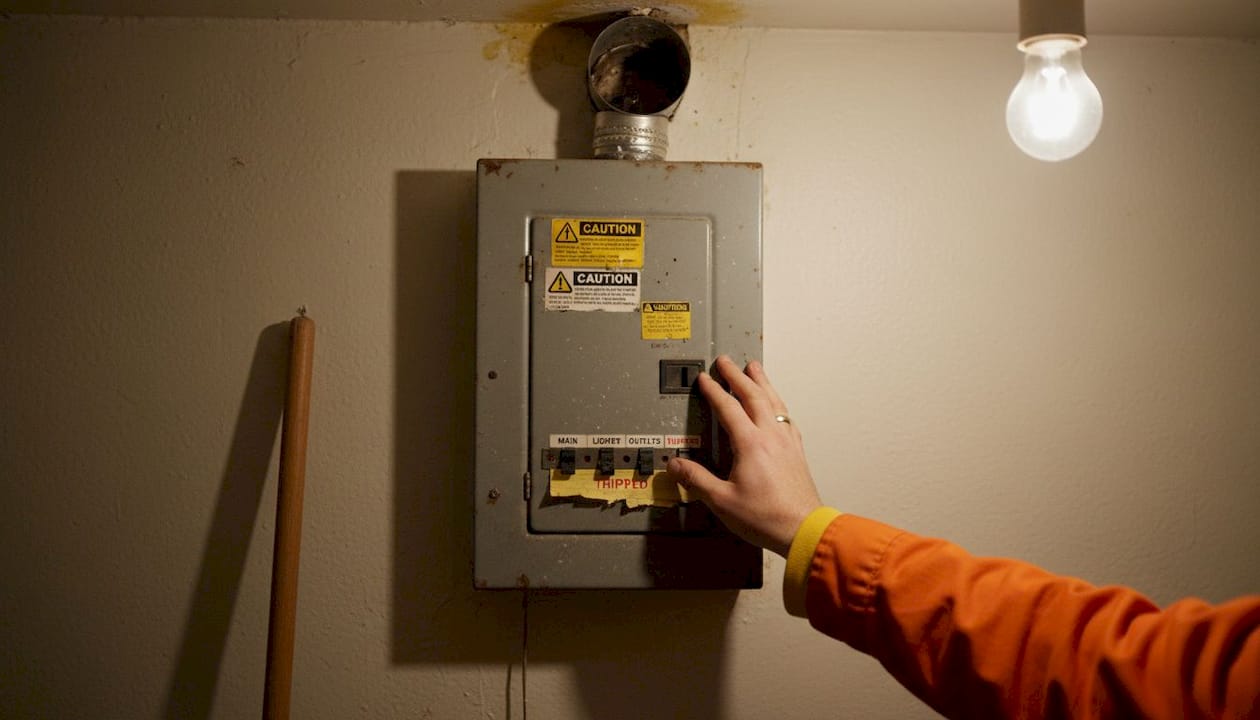
Beyond capacity, some upgrades are urgent because of safety defects. Certain older panel brands have been recalled or flagged for dangerous failure modes. Persistent tripped breakers, signs of overheating like scorch marks or a burning smell, and corrosion inside the box are all red flags. Our panel upgrade safety guide covers these warning signs in detail.
One example worth highlighting: homeowners switching to tankless water heaters often discover their panel can’t handle the surge load. It’s a situation that catches people off guard because the water heater works, but the panel is now dangerously overloaded.
Common triggers for a panel upgrade include:
- Tripped breakers that reset but keep tripping
- Installing an EV charger, heat pump, or electric range
- Adding a home addition or garage workshop
- A panel that is 25 to 40 years old
- Evidence of overheating inside the panel box
- Purchasing a home with a flagged or recalled panel brand
Pro Tip: Even if your lights work fine right now, your panel might already be at its limit. If you’re planning any high-draw technology like an EV charger, get a load calculation done before you assume your existing panel can handle it.
Explore our service panel upgrade solutions if any of these scenarios sound familiar.
Panel upgrades and safety: Avoiding hidden risks
Beyond just keeping up with power demands, let’s look at the safety dimension, which is often overlooked but crucial.
Electrical panels don’t just route power. They protect your entire home from faults, overloads, and arc faults that can start fires inside your walls without a single visible warning sign. Upgrading your panel also brings your service equipment and safety clearances up to modern NEC requirements, including labeling, working clearance, and required protective devices. That’s not just bureaucratic box-checking. Each of those requirements exists because someone’s home burned down without it.
An electrical fire does not announce itself. A faulty panel can arc quietly inside your walls for months before the damage becomes visible. By then, the risk to your family and your home is already severe.
Some panels don’t just wear out. They’re dangerous from a design standpoint. Federal Pacific Stab-Lok panels, for example, have documented failure risks where breakers fail to trip during an overload, meaning the very protection mechanism designed to stop fires simply doesn’t work. If your home has one of these panels, repair is not an option. Replacement is the only safe path forward.
Here’s what a safe, code-compliant panel upgrade should include:
- Full load calculation to confirm the new panel size is appropriate for current and planned loads.
- Installation of AFCI breakers (arc fault circuit interrupters) where required, particularly in living spaces and bedrooms.
- GFCI protection in bathrooms, kitchens, garages, and outdoor circuits.
- Clear, accurate labeling of every circuit in the panel so anyone, including emergency responders, can identify and shut off circuits quickly.
- Proper working clearance in front of the panel box, at least 36 inches, so the panel can be safely serviced.
- Inspection and permitting through the local authority to confirm compliance.
Insurance is another real concern. Some homeowners have had claims denied or policies canceled because their panel was a known liability. An outdated or recalled panel can make it harder to sell your home too, since home inspectors flag these issues and buyers often walk away. Visit our electrical panel repair safety page for information on what a qualified evaluation covers.
Taking care of these essential upgrades for safety now is always less expensive than dealing with the aftermath of a fire or a failed home sale.
What makes a panel upgrade ‘up to code’ in Delaware?
Safety is only part of the equation. Let’s dig into why code compliance in Delaware is extra important and what it requires.
Delaware follows its own adopted version of the National Electrical Code (NEC), currently the 2020 edition with local amendments. Delaware’s electrical code version directly affects what a compliant panel upgrade must include, so it matters that your electrician knows these specific requirements and isn’t just working from a generic checklist.
Here’s a practical comparison of what was acceptable under older code versus what’s required now:
| Requirement | Older code (pre-2020) | Current Delaware NEC (2020) |
|---|---|---|
| AFCI protection | Limited bedrooms only | Required in most living spaces |
| GFCI protection | Kitchens, bathrooms | Expanded to garages, basements, outdoors |
| Panel labeling | Basic ID required | Must be accurate, legible, and durable |
| Working clearance | 30 inches wide | Maintained 36 inches in depth |
| Permitting required | Sometimes waived | Required for all service upgrades |
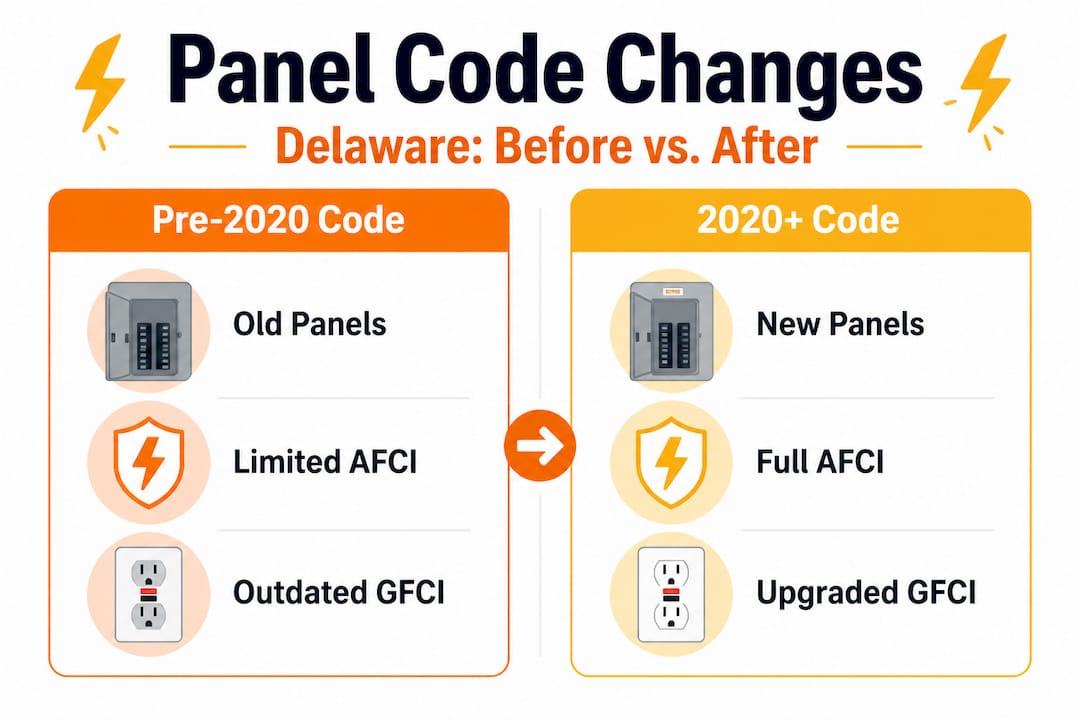
This matters in a very practical way. If an electrician upgrades your panel using older code standards, the work may not pass a Delaware inspection. Worse, your homeowner’s insurance may not recognize the upgrade as code-compliant if a claim arises.
Key compliance points to confirm with your electrician:
- Which NEC edition is currently adopted in Delaware
- Whether local amendments change any specific requirements
- What permits are required and who pulls them
- Whether the inspector will require any additional work after the panel swap
When you upgrade your electrical panel in Delaware, it pays to work with someone who knows these rules cold. Guessing on code compliance is a liability nobody needs. Our Delaware panel upgrade compliance resources can help you understand what questions to ask.
When a full upgrade isn’t the answer: Alternatives and edge cases
Not every problem means you need a complete replacement. Let’s look at common alternatives and when they’re appropriate.
Some situations are better handled with targeted circuit work or subpanels instead of a full service replacement. This is worth knowing because a full panel upgrade, while often the right call, is a significant investment. If your situation doesn’t actually require it, a smarter targeted fix will save you money without compromising safety.
Subpanels are a strong option when you’re adding a garage, workshop, home addition, or outbuilding. Rather than upgrading your main service, a subpanel feeds power from the existing main panel to a new area of the home. This is often faster, less expensive, and perfectly safe when done correctly.
Targeted breaker replacements work well when a specific circuit is the problem. If one breaker repeatedly fails or you need to add a dedicated circuit for a single appliance, that’s often a circuit-level fix rather than a full panel job.
Partial upgrades make sense in older homes where some components are safe and compliant but others are not. A licensed electrician can identify what actually needs replacing versus what can stay.
Here are the situations where a full panel replacement is NOT always necessary:
- Adding power to a detached garage or workshop
- Installing a dedicated circuit for a new appliance like a washer or dryer
- Replacing a single failed or outdated breaker
- Adding circuits for an addition when the main service is already adequate
- Resolving a specific GFCI or AFCI compliance gap on one circuit
Pro Tip: Don’t let a contractor talk you into a full panel upgrade without getting a detailed explanation of why your specific situation requires it. A qualified assessment from someone you trust should always come first. Review our panel upgrade guidelines for a clearer sense of what the decision process should look like.
Getting started: Smart steps for Delaware homeowners
So, what should you actually do next? Follow this step-by-step process to make your panel upgrade safe and successful.
Because Delaware’s electrical code version affects what a compliant upgrade requires, your goal is to go into this process informed rather than reactive. Here’s a practical checklist:
- Check your panel’s age and brand. If it’s more than 25 to 30 years old, or if you recognize it as a recalled brand, prioritize getting a professional evaluation soon.
- Research recalls. Federal Pacific, Zinsco, and certain Pushmatic panels have known defect histories. A quick search of your panel’s brand can tell you a lot.
- List new or planned loads. Write down every high-draw appliance you’ve added recently or plan to add in the next few years. This list helps an electrician run an accurate load calculation.
- Ask the right questions when hiring. Specifically ask whether the electrician is familiar with Delaware’s current NEC adoption and local amendments. Experience with the state’s specific requirements matters.
- Request permits. Any legitimate panel upgrade in Delaware should be permitted and inspected. If a contractor discourages this, walk away.
- Get a written scope of work. Before any work begins, confirm in writing what’s being replaced, what new devices will be installed, and what the expected inspection outcome is.
These essential upgrades for Delaware homes steps work whether you’re replacing a clearly failing panel or just proactively future-proofing your home for the next decade of electrical demand.
The uncomfortable truth about panel upgrades
Here’s a perspective we’ve earned from over 20 years of electrical work in Delaware: most homeowners only call us after they’ve waited too long.
The common scenario is this. A homeowner notices a breaker tripping occasionally, figures it’s just a quirk, and moves on. Maybe they mention it to a neighbor. Life gets busy. A year passes. Then one night there’s a burning smell near the panel, or a breaker fails completely and something important in the house goes dark. That’s the moment we get the call.
The problem with electrical issues is that they’re invisible until they’re not. A panel that’s quietly running hot, or a breaker that’s been weakened by years of nuisance trips, doesn’t send obvious warning signals. It just fails eventually, and failure in an electrical panel doesn’t mean a minor inconvenience. It can mean a house fire.
We’ve also seen homeowners delay because they’re worried about cost. That’s understandable. But a panel upgrade done proactively, on your schedule, at a planned cost, is always a better outcome than an emergency replacement after a failure or, worse, the cost of fire damage to your home and belongings.
The other thing we’ll say plainly: qualified electricians can spot the early warning signs that homeowners miss. But spotting them only helps if you act on the advice. We’ve written detailed guidance on why proactive upgrades matter, and the core message is the same every time. Prevention is cheaper, safer, and far less stressful than recovery.
Don’t let cost concerns or the absence of dramatic symptoms be the reason you delay a decision that protects your family.
Get your panel upgrade done safely with Delaware experts
Ready to make your home safer? Knowing the risks and the code requirements is a great start, but the next step is getting eyes on your actual panel from someone who knows Delaware’s electrical standards inside and out.
At Conductive Electrical Contracting, we’ve been handling panel upgrades across Delaware for over 20 years. We pull the required permits, work to the current Delaware NEC standards, and explain every step of the process so you’re never left guessing. Whether you need a full service upgrade, a subpanel for a new garage, or a thorough inspection to find out where you actually stand, we’re here to help. Download our upgrade safety guide for additional guidance, or contact us directly to schedule your evaluation.
Frequently asked questions
How do I know if my electrical panel needs an upgrade?
Signs include breakers tripping repeatedly, adding heavy appliances like EV chargers or heat pumps, flickering lights, or owning an old recalled panel brand. Capacity and load issues are the most common triggers, especially when electrification demands grow beyond what the original panel was designed to handle.
Does Delaware require AFCI or GFCI protection in all upgraded panels?
Yes, upgrades must meet Delaware’s adopted NEC code, which includes AFCI and GFCI protection where specified. Delaware’s electrical code version determines exactly which circuits and locations require these protective devices, so your electrician must be current on state-specific requirements.
Can I upgrade just part of my electrical system instead of the whole panel?
In some cases, adding a subpanel or upgrading select circuits is a smarter choice than full replacement. Targeted circuit work or subpanels can solve specific problems without the cost and scope of a complete service upgrade. Always get a professional assessment first.
Are certain brands or models of panels especially risky?
Yes, some recalled or outdated panels like Federal Pacific Stab-Lok should be replaced immediately for safety. Recalled or defective panel brands and overheating conditions are generally treated as replacement emergencies, not repair candidates.
Will upgrading my panel increase my home value?
Yes, upgrading for safety and code compliance can meaningfully boost your home’s value and simplify the selling process. Buyers and home inspectors treat a modern, code-compliant panel as a strong positive, while an old or recalled panel can stall a sale or push a buyer to walk away entirely.