Planning electrical upgrades for your Delaware home means making real choices under real pressure. You want to stay safe, pass inspections, keep insurance costs down, and not redo work you just paid for. Delaware adopted NEC 2020 standards in 2021, raising the bar on what’s required in residential wiring, protection devices, and panel capacity. This guide cuts through the noise and gives you a clear, prioritized list of the upgrades that matter most, why they matter, and how to time them so you get the most value for every dollar you spend.
Table of Contents
- Criteria for essential electrical upgrades in Delaware
- GFCI and AFCI protection: Preventing shocks and fires
- Panel upgrades and rewiring: Foundation for safe, modern homes
- Energy efficiency and surge protection: Going beyond compliance
- Permits, inspections, and timing your upgrades for maximum value
- Our expert perspective: The hidden wins of Delaware electrical upgrades
- Get professional help for your Delaware electrical upgrades
- Frequently asked questions
Key Takeaways
| Point | Details |
|---|---|
| Code compliance matters | Upgrading to NEC 2020 standards keeps your Delaware home safe and legal. |
| Prioritize GFCI and AFCI | Protection devices prevent electrical shocks and house fires for essential safety. |
| Update panels, save money | Panel upgrades and rewiring boost safety, enable new tech, and may reduce insurance costs. |
| Think beyond code | Energy-efficient lighting and surge protection enhance comfort and protect your investments. |
| Smart scheduling saves | Plan upgrades during renovations for easier permitting and lower costs. |
Criteria for essential electrical upgrades in Delaware
Having previewed what’s at stake, let’s clarify what makes certain upgrades truly essential for your Delaware home.
Not every upgrade belongs on your must-do list. The word “essential” means something specific here. An upgrade earns that label when it falls into at least one of these four categories:
- Code compliance: Required by Delaware’s adopted NEC 2020 standards, which became effective in 2021
- Fire and shock safety: Directly reduces the risk of electrical fires or electrocution
- Energy savings: Cuts monthly utility costs with a measurable return on investment
- Insurance and resale value: Lowers your homeowner’s insurance premium or increases your home’s appraised value
Delaware follows NEC 2020 with expanded protection requirements, including a notable HVAC GFCI exemption that runs until September 2026. Knowing this lets you plan smarter. For example, you don’t need to rush HVAC GFCI work right now, but you should budget for it before the exemption expires.
“Pulling permits and scheduling inspections isn’t optional. It’s how you protect your investment, your family, and your ability to sell the home later.”
Permits and inspections matter more than most homeowners realize. Unpermitted work can void your insurance, complicate a home sale, and leave you liable for code violations. Reviewing home repair guides alongside your contractor helps you understand what’s involved before work begins. For a broader look at what Delaware homeowners should prioritize, the Delaware home safety upgrades resource covers the full picture clearly.
The smartest approach is to bundle upgrades together. A kitchen renovation is the perfect time to add GFCI outlets, upgrade circuits, and install under-cabinet lighting. Doing it all at once costs far less than scheduling three separate visits and pulling three separate permits. Planning around safe home wiring best practices from the start saves both time and money.
GFCI and AFCI protection: Preventing shocks and fires
With criteria in hand, let’s look at the first and most critical upgrade category: life-saving protective devices.
GFCI stands for ground-fault circuit interrupter. It monitors the flow of electricity and shuts off power within milliseconds when it detects a dangerous imbalance, like current leaking toward water or a person. AFCI stands for arc-fault circuit interrupter. It detects the irregular electrical sparking that happens inside walls before it ignites insulation or framing.
Both devices are required under NEC 2020, and both are non-negotiable if you’re renovating or selling. Here’s where each is required in Delaware:
- GFCI protection: Kitchens, bathrooms, garages, outdoor outlets, unfinished basements, crawl spaces, and boathouses
- AFCI protection: Bedrooms, living rooms, hallways, dining rooms, and most other living spaces
- HVAC exception: HVAC equipment is exempt from GFCI requirements until September 2026
AFCI protection is required under NEC 210.12 for most living areas, including kitchens and bedrooms, specifically because arc faults are a leading cause of residential electrical fires. An arc fault can smolder inside a wall for hours before flames appear. That’s why AFCI breakers are so valuable: they catch the problem at the source.
“GFCI and AFCI devices are the most cost-effective life-safety upgrades available to homeowners. They cost a fraction of what a fire or electrocution lawsuit would.”
Pro Tip: If you’re already planning a kitchen or bathroom renovation, add GFCI outlet installation to the project scope. The electrician is already there, the walls may already be open, and the incremental cost is minimal compared to scheduling a separate service call.
Understanding how these devices work in your specific home is worth the time. The GFCI outlet benefits page explains the mechanics and helps you identify which outlets in your home may still be unprotected.
Panel upgrades and rewiring: Foundation for safe, modern homes
Protection devices matter, but everything runs through your panel and main wiring. Here’s why this is the next mission-critical upgrade.
Your electrical panel is the nerve center of your home. Every circuit, every outlet, every appliance depends on it. Older panels, especially those installed before 1980, were designed for a fraction of today’s electrical demand. They often lack the capacity to safely handle EV chargers, home offices, modern HVAC systems, and large kitchen appliances running simultaneously.
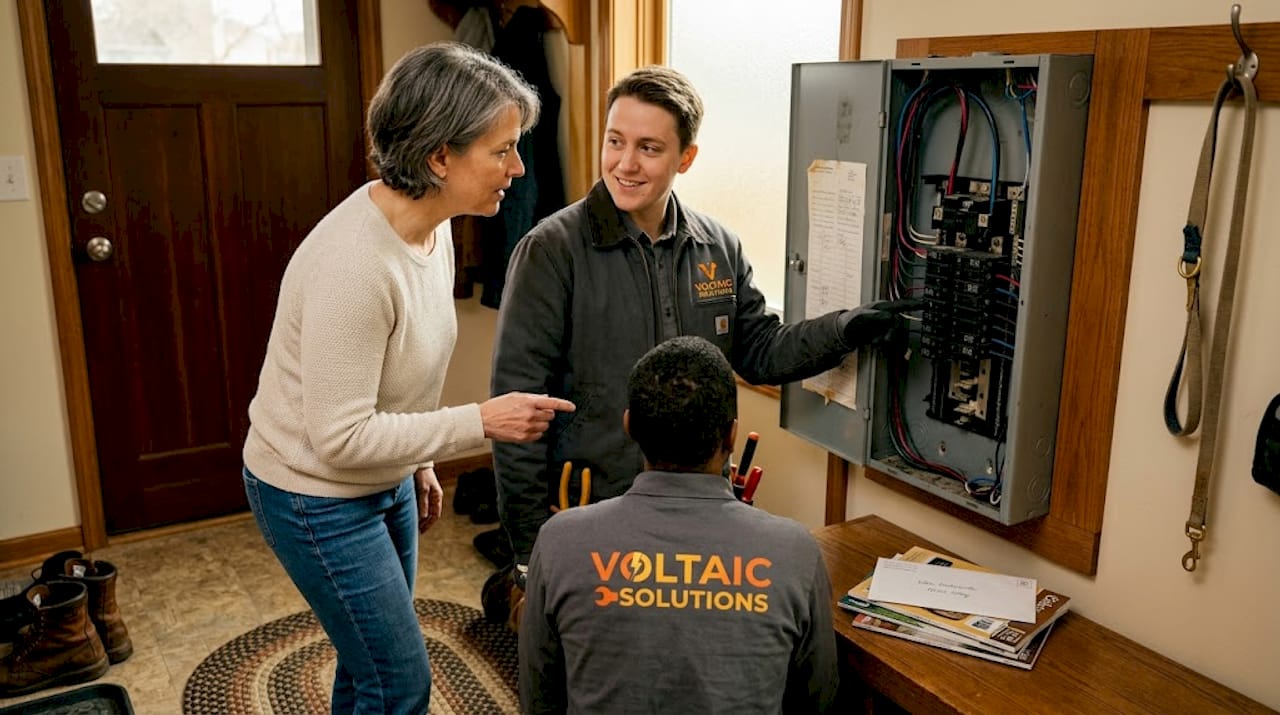
Panel upgrades lower insurance premiums and inspections are recommended every 5 to 10 years for pre-1980 homes. Insurance companies know that aging panels carry higher fire risk, and they price policies accordingly. Upgrading your panel can directly reduce what you pay each year.
Wiring is the other half of the equation. Homes built before 1978 may have aluminum branch circuit wiring, which expands and contracts more than copper and can loosen at connections over time, creating fire hazards. Partial fixes like pigtailing aluminum wiring with copper connectors are acceptable short-term solutions, but a full rewire is the safest long-term answer.
Here’s a straightforward comparison to help you decide:
| Option | Safety level | Cost range | Best for |
|---|---|---|---|
| No upgrade | Low | $0 | Not recommended for pre-1980 homes |
| Pigtail aluminum wiring | Moderate | $500 to $1,500 | Budget-limited short-term fix |
| Panel upgrade only | High | $1,500 to $4,000 | Homes with copper wiring and aging panel |
| Full rewire + panel upgrade | Highest | $8,000 to $20,000+ | Pre-1980 homes with aluminum wiring |
The panel upgrade steps involved in a modern service panel replacement are more straightforward than most homeowners expect, especially when planned alongside a renovation. Scheduling a safety inspection before committing to any upgrade path gives you a clear picture of what your home actually needs.
If you’re building an addition or finishing a basement, reviewing wiring requirements for new construction helps you understand what your contractor must install to pass inspection. And if your project includes an HVAC system upgrade, coordinate the electrical work at the same time to avoid redundant service calls.
Energy efficiency and surge protection: Going beyond compliance
Once the foundation is set, upgraded devices and more efficient energy use complete the picture.
Safety compliance is the floor, not the ceiling. Once your panel is solid and your protection devices are in place, the next layer of upgrades focuses on reducing what you spend every month and protecting the expensive equipment already in your home.
LED lighting is the easiest win. Switching from incandescent or fluorescent bulbs to LED reduces energy use by 75 to 80 percent. LEDs also last 15 to 25 times longer than incandescent bulbs, which means fewer replacements and less maintenance over time. In a home with 40 to 50 light fixtures, that’s a meaningful reduction in your monthly utility bill.
Whole-house surge protection is the upgrade most homeowners skip until something expensive breaks. A single voltage spike, from a lightning strike, a utility grid fluctuation, or even a large appliance cycling on, can damage or destroy smart TVs, computers, refrigerators, and HVAC control boards. Surge protection and energy monitoring are strongly recommended even when not mandated by code, because the cost of replacing damaged electronics far exceeds the cost of prevention.
Here’s how the options stack up:
| Upgrade | Monthly savings | Upfront cost | Code required? |
|---|---|---|---|
| Traditional lighting (no change) | $0 | $0 | N/A |
| LED lighting conversion | $20 to $60+ | $200 to $800 | No |
| Whole-house surge protector | Indirect (equipment protection) | $300 to $600 installed | No |
| LED + surge protection combined | Best overall value | $500 to $1,400 | No |
Pro Tip: Ask your electrician about energy monitoring systems during your next service visit. These devices plug into your panel and give you a real-time breakdown of which circuits and appliances are drawing the most power. That data makes it easy to identify waste and prioritize future upgrades.
For homeowners who want to take their lighting further, the lighting upgrade services available locally cover everything from recessed lighting to outdoor security lighting, all installed to current code.
Permits, inspections, and timing your upgrades for maximum value
Even the best upgrades only protect you when they’re properly approved and timed. Here’s how to get it right.
Skipping permits is one of the most expensive mistakes Delaware homeowners make. It feels like a shortcut, but it creates serious problems later: failed home inspections during a sale, insurance claim denials, and potential fines from the local building authority. The good news is that pulling permits is straightforward when you work with a licensed electrician who handles the paperwork as part of the job.
Here’s a simple step-by-step process to follow:
- Hire a licensed Delaware electrician who is familiar with NEC 2020 requirements and local amendments
- Request a written scope of work that lists every upgrade, the materials used, and the permit numbers
- Confirm the permit is pulled before any work begins, not after
- Schedule the inspection with your local building department once work is complete
- Keep all inspection records in a home file, especially if you plan to sell within the next 10 years
Upgrades during renovations like kitchen remodels or basement finishes are significantly cheaper than standalone electrical projects because the walls are already open and the contractor is already on site. Bundling your GFCI upgrades, panel work, and lighting into a single renovation project can cut your total cost by 20 to 30 percent compared to scheduling each separately.
Pro Tip: If your home was built before 1980 or you’re preparing to sell, schedule a full electrical inspection first. Inspections every 5 to 10 years for pre-1980 homes catch problems before they become emergencies or deal-breakers during a sale.
The inspection and permit tips available from local licensed contractors walk you through exactly what to expect, so there are no surprises when the inspector shows up.
Before upgrades, confirm:
- Permits have been pulled for all major work
- Your electrician is licensed in Delaware
- The scope of work matches NEC 2020 requirements
After upgrades, confirm:
- Final inspection is passed and documented
- All new outlets and breakers are labeled correctly
- You have copies of permits and inspection reports in your files
Our expert perspective: The hidden wins of Delaware electrical upgrades
You’ve seen the technical essentials. Here’s how experienced pros actually approach Delaware home upgrades.
After more than 20 years working in Delaware homes, one thing stands out: homeowners consistently underestimate the compounding value of doing upgrades right the first time. Most people think of electrical work as a cost. The ones who come out ahead think of it as an investment with measurable returns.
A panel upgrade doesn’t just prevent fires. It makes your home insurable at a better rate, supports the EV charger you’ll want in three years, and adds real dollar value when you sell. GFCI and AFCI devices don’t just satisfy an inspector. They prevent the kind of event that destroys a home and everything in it.
The homeowners who get the best value are the ones who look ahead. Delaware’s HVAC GFCI exemption ends in September 2026. If you’re planning any HVAC work before then, it makes sense to get the GFCI protection installed at the same time rather than paying for a second service call in 2026. That’s not just smart planning. It’s how you avoid doing the same job twice.
Surge protection is another example of a non-required upgrade that pays for itself quickly. One bad storm or grid fluctuation can destroy thousands of dollars in electronics. The whole-house surge protector costs a few hundred dollars installed. The math isn’t complicated.
The value in safety upgrades goes well beyond compliance. It’s about building a home that works reliably, costs less to insure, and holds its value when the market shifts. That’s the real goal, and it’s completely achievable with the right plan.
Get professional help for your Delaware electrical upgrades
Ready to put these essential upgrades in action? Here’s how to get started with trusted Delaware experts.
Knowing what needs to be done is only half the equation. Having a licensed, experienced electrician execute the work correctly is what actually protects your home and your family. At Conductive Electrical Contracting, we’ve spent over 20 years helping Delaware homeowners navigate code requirements, plan cost-effective upgrades, and pass inspections the first time.

Whether you need whole home surge protection to safeguard your electronics, a full service panel upgrade to handle modern electrical loads, or electrical repairs and troubleshooting to identify hidden problems before they become emergencies, our team handles it all with the professionalism and attention to detail your home deserves. Contact us today for a personalized estimate and let’s build a safer, more efficient home together.
Frequently asked questions
Do I need permits for all electrical upgrades in Delaware?
Most major electrical upgrades, especially during renovations, require permits and inspections to meet Delaware’s NEC 2020 standards adopted in 2021. Minor repairs may not require a permit, but always confirm with your licensed electrician before work begins.
Where are GFCI outlets required in my Delaware home?
GFCI outlets are required in wet areas like kitchens, bathrooms, garages, and outdoor spaces under NEC 2020. HVAC equipment remains exempt from this requirement until September 2026.
How often should I have my home’s electrical system inspected?
Homes built before 1980 should be inspected every 5 to 10 years to catch aging wiring, outdated panels, and safety issues before they become emergencies or affect your insurance coverage.
Is surge protection required by Delaware code?
Surge protection is not currently mandated, but strongly recommended beyond code for protecting expensive electronics and smart appliances from voltage spikes caused by storms or grid fluctuations.
What are the benefits of upgrading to LED lighting?
LED lighting reduces energy use by 75 to 80 percent compared to traditional incandescent bulbs, with a significantly longer lifespan that reduces replacement and maintenance costs over time.