Electrical mistakes in Delaware renovations don’t always announce themselves right away. A circuit installed without a permit, wiring skipped on the inspector’s checklist, or a panel never upgraded to handle modern loads can sit quietly for years until a home sale falls through, an insurance claim gets denied, or worse, a fire starts. Many homeowners assume electrical work is straightforward enough to handle themselves or hire whoever bids lowest. The truth is that DIY electrical work carries serious risks including injury, fire, code violations, and voided insurance coverage. This guide walks you through exactly what licensed electricians do, why compliance matters, and how to keep your renovation on track.
Table of Contents
- Understanding the role of electricians in Delaware renovations
- Common electrical upgrades and why they matter
- Delaware compliance: local codes, permits, and inspections
- Low-voltage exemptions, edge cases, and hot-button debates
- Why investing in professional electrical work pays off
- Get safe, reliable electrical work for your Delaware renovation
- Frequently asked questions
Key Takeaways
| Point | Details |
|---|---|
| Licensed electricians ensure safety | Only professionals can guarantee your renovation meets NEC 2020 and Delaware local codes so your insurance stays valid. |
| Upgrading old wiring prevents hazards | Modernizing panels and wiring reduces fire risk and stops costly inspection failures before they happen. |
| Compliance is mandatory, not optional | Permits, inspections, and documentation are required for almost all renovation electrical work in Delaware. |
| Low-voltage work is mostly exempt | Doorbells, thermostats, and similar systems under 50V don’t require a licensed electrician but check recent updates. |
Understanding the role of electricians in Delaware renovations
Licensed electricians are responsible for far more than pulling wire through walls. During a renovation, they serve as the technical backbone of your entire electrical system. They assess what your home currently has, what the renovation requires, and what the law demands. That three-part job covers everything from the first permit application to the final inspection sign-off.
Delaware follows the National Electrical Code (NEC) 2020 as its baseline standard, with local amendments that can vary by county or municipality. The NEC sets requirements for things like wire gauge, circuit spacing, device placement, and the use of safety technologies like arc-fault circuit interrupters (AFCIs) and ground-fault circuit interrupters (GFCIs). Renovations must meet these standards regardless of the age of the home.
Here is what a licensed electrician handles from start to finish in a typical Delaware renovation:
- Pulling the required electrical permit before any work begins
- Running new branch circuits for kitchens, bathrooms, or added square footage
- Installing or upgrading the main service panel
- Adding AFCI and GFCI protection where required
- Replacing deteriorated or unsafe wiring
- Coordinating the rough-in inspection after wiring is run but before walls close
- Completing the final inspection once all devices and covers are installed
“Skipping a licensed electrician during a renovation is like removing load-bearing walls without an engineer. The risk isn’t theoretical. It shows up the moment something goes wrong or when you try to sell.”
As noted by electrical renovation professionals, licensed electricians in Delaware handle wiring installation, repairs, panel upgrades, lighting and outlet installation, and ensure NEC 2020 compliance through permits and inspections. Without them, you risk delays from failed inspections, fines from the municipality, voided homeowner’s insurance, and in the worst cases, electrical fires caused by work that doesn’t meet code. Learning how to approach project management for safe renovations can also help homeowners plan around these critical steps.
Common electrical upgrades and why they matter
Knowing what electricians do sets the stage, but understanding which upgrades matter most helps you prioritize your renovation budget and avoid costly surprises later.
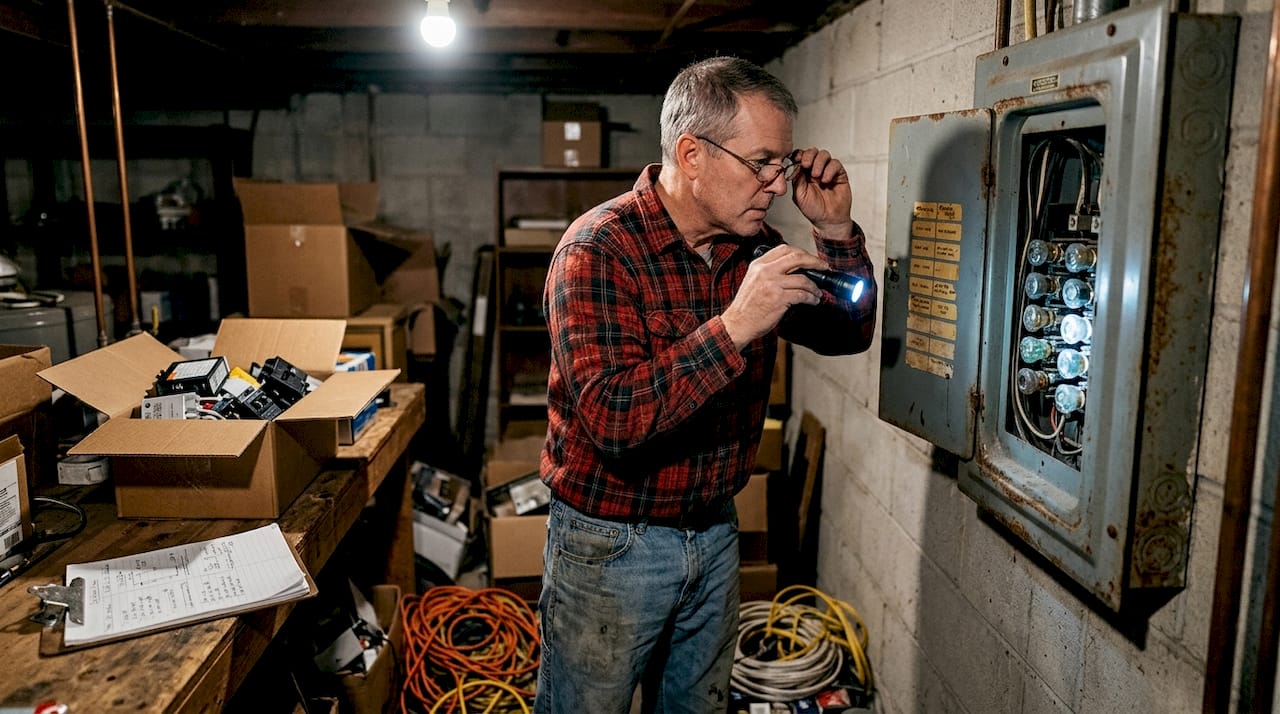
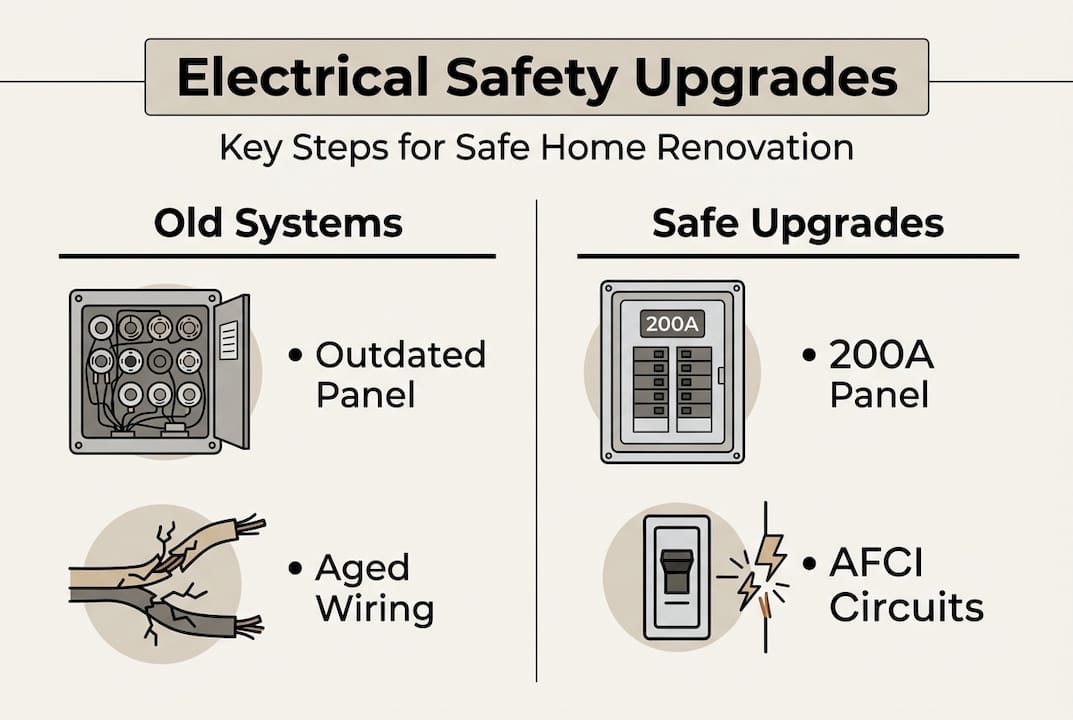
The most critical upgrades in older Delaware homes include service panel replacements, new dedicated circuits, and the installation of modern safety devices. Many homes built before 1980 still run on 60-amp or 100-amp panels. Today’s households with electric vehicles, modern appliances, and smart systems routinely need 200-amp service panels to operate safely without tripping breakers or overloading circuits.
| Old Component | Modern Replacement | Safety Benefit |
|---|---|---|
| 60A or 100A panel | 200A service panel | Handles modern loads without overload |
| Aluminum wiring (1960s-70s) | Copper wiring | Eliminates fire risk from oxidation |
| Knob-and-tube wiring (pre-1940) | NM-B or MC cable | Removes insulation and overload hazards |
| No AFCI protection | AFCI breakers | Detects dangerous arc faults in wiring |
| No GFCI outlets | GFCI outlets or breakers | Prevents shock in wet locations |
Replacing aluminum wiring and knob-and-tube systems is not optional during most renovations. Old wiring types like these are known fire hazards. Aluminum expands and contracts differently than copper, causing loose connections over time. Knob-and-tube lacks a ground wire entirely and can’t handle the load of a modern household.
Here is the typical order of operations for a panel and wiring upgrade during a renovation:
- Electrician inspects the existing panel and wiring for code violations
- Homeowner and electrician agree on scope, and permits are pulled
- Old wiring is removed or isolated and new circuits are run
- Panel is replaced or upgraded and new circuits are connected
- Rough-in inspection is completed and approved
- Walls close, devices are installed, and final inspection is scheduled
- Inspector signs off and the job is code-compliant
According to renovation infrastructure guidelines, upgrades from 60 or 100 amps to 200 amps are increasingly necessary for modern loads including EV charging and high-efficiency appliances. Following a logical renovation workflow also prevents costly re-work when trades are not sequenced properly.
Pro Tip: If your renovation opens up walls anyway, use that opportunity to upgrade the panel and run new circuits. The labor cost to open walls a second time far exceeds the upfront investment.
Delaware compliance: local codes, permits, and inspections
Upgrading your electrical system correctly means more than good workmanship. It means navigating Delaware’s specific code requirements at every step of the process.
Obtaining an electrical permit in Delaware starts with a licensed contractor submitting a permit application to the local building authority, which in Wilmington falls under the city’s Office of Inspections. The permit details the scope of work and the installer’s credentials. Once work begins, the process unfolds in two major phases: the rough-in inspection and the final inspection.
| Inspection Stage | What Inspectors Check |
|---|---|
| Rough-in | Wire type, gauge, stapling intervals, box fill, panel rough-in |
| AFCI/GFCI placement | Required locations per NEC 2020 (kitchens, baths, bedrooms) |
| Panel inspection | Breaker sizing, grounding, bonding, clearance |
| Final inspection | Device covers, outlet polarity, load calculations, labels |
Work done without a permit carries real consequences. Unpermitted electrical work is one of the most common reasons renovation projects face delays, and it can trigger insurance denials when a claim is filed. Lenders and buyers during a home sale routinely request permit history, and missing records can kill a deal or force expensive re-inspections.
The NEC 2020, as adopted in Delaware, specifically requires AFCI protection in bedrooms, living rooms, and most habitable spaces. GFCI protection is required in kitchens, bathrooms, garages, and outdoor locations. Electrical panel upgrades must meet load calculation requirements, and new construction or major additions must meet new home wiring requirements in full.
For reference, review NEC 2020 requirements to understand what specific code sections affect your renovation type.
Documentation you should save after any electrical renovation:
- Copies of all permits issued
- Inspection reports from both rough-in and final inspections
- Contractor’s license number and proof of insurance
- Warranty or documentation for panels and devices installed
- As-built wiring diagrams if provided by the electrician
Low-voltage exemptions, edge cases, and hot-button debates
Beyond standard wiring, many Delaware homeowners ask which specialty systems and smaller projects actually require a licensed electrician. The answer is less straightforward than most people expect.
In Delaware, low-voltage systems under 50 volts such as telecommunications, security, and landscape lighting are currently exempt from the journeyman electrician license requirement. This means you or a specialty installer can legally handle doorbell wiring, irrigation controls, basic speaker systems, and outdoor low-voltage path lights without pulling an electrical permit or hiring a licensed electrician.
However, this exemption has been at the center of an active legislative debate in Delaware. Some trade groups and safety advocates argue that low-voltage work is increasingly sophisticated and that removing the exemption would improve safety and consumer protection. Opponents, including many small specialty contractors, argue it would shut out legitimate businesses and raise costs for homeowners without meaningful safety benefits.
Here is where the edge cases get tricky. A major renovation can trigger a full system review even if the original project scope seemed small. If your renovation disturbs more than a certain threshold of existing wiring, or if an inspector determines the existing system is unsafe, you may be required to bring the entire affected area up to current code. This is called a major system disturbance, and it can significantly expand the project scope.
Tasks that generally do not require a licensed electrician in Delaware:
- Replacing a doorbell transformer or button
- Installing low-voltage landscape lighting (under 50V)
- Setting up a pre-wired security camera system
- Swapping out a thermostat on an existing system
- Running ethernet or coaxial cable
For anything above 50V, including residential electrical upgrades for safety devices, ceiling fans with wiring changes, or new outlet installations, a licensed electrician is required.
Pro Tip: Before you start any project, call your local building authority or a licensed electrician to confirm what is and is not exempt. Delaware’s regulations can shift quickly, especially with active legislation in play.
Why investing in professional electrical work pays off
Here is something the renovation industry rarely tells you directly: most electrical shortcuts do not save money. They defer cost and multiply it.
We have seen homeowners pay to open walls twice because unpermitted wiring failed inspection during a home sale. We have seen insurance companies deny fire claims because the damaged circuit was installed without a permit. The financial loss is real, and it often arrives at the worst possible moment. Verify every contractor’s credentials including their Delaware license number, active insurance, and project references before any work begins.
The other myth worth busting is that a panel upgrade can wait. If you are adding a home office, EV charger, or new HVAC system, your existing 100-amp panel is almost certainly undersized. Future buyers will see it, and their home inspector will flag it. Upgrading during your current renovation costs a fraction of what a standalone upgrade costs later. Understanding DIY electrical risks is a good starting point for knowing where the real dangers lie.
Hiring right the first time is not just about safety. It is about protecting your investment, your insurance coverage, and your ability to sell the home on your terms.
Get safe, reliable electrical work for your Delaware renovation
Ready to move forward with your renovation and make sure the electrical work is done right the first time? Conductive Electrical Contracting has served Delaware homeowners and property managers for over 20 years, handling everything from electrical repairs and troubleshooting to full panel replacements and NEC 2020 compliance upgrades.

Whether you need licensed electrical installation services or are planning a full renovation and need a panel assessment, our team is ready to review your project, pull the necessary permits, and deliver work that passes inspection every time. Contact us today to schedule your estimate and keep your renovation on time and on budget. Our service panel upgrade services are a great place to start if your home is running on outdated amperage.
Frequently asked questions
What electrical work requires a permit in Delaware renovations?
All significant wiring, panel work, and new circuit installations require permits and inspections in Delaware. Low-voltage adjustments under 50V, such as landscape lighting or doorbell wiring, typically do not.
Is it safe or legal to do my own wiring during a renovation?
DIY wiring is high risk and can void your homeowner’s insurance. Licensed electricians are required for most residential electrical work to meet NEC 2020 and Delaware local codes.
What are the risks of not upgrading old wiring or panels during a renovation?
Outdated panels and old wiring types like aluminum or knob-and-tube can cause overloads, fires, and failed inspections, all of which can delay your project or reduce your home’s resale value.
Are smart home systems and EV chargers covered by low-voltage exemptions in Delaware?
No. Smart home systems and EV charger wiring typically operate above 50V, which places them outside the low-voltage exemption and requires installation by a licensed electrician.