Flickering lights and a tripped breaker might feel like minor nuisances, but in Delaware, they can signal something far more serious. Many homeowners and small business owners dismiss these warning signs until a sparking outlet or burning smell forces the issue. What most people don’t realize is that Delaware has strict rules about who can legally perform emergency electrical repairs, and getting this wrong can void your insurance, trigger fines, or put lives at risk. This guide walks you through what qualifies as an emergency, who is allowed to fix it, and exactly what steps to take when seconds count.
Table of Contents
- Defining emergency electrical repair in Delaware
- Who is allowed to perform emergency electrical repairs?
- Typical emergency scenarios and Delaware-specific hazards
- Why using licensed professionals matters: Safety, compliance, and real outcomes
- What to do in an electrical emergency: Step-by-step triage and next steps
- What most Delaware homeowners miss about electrical emergencies
- Need help now? Get fast, licensed emergency repairs in Delaware
- Frequently asked questions
Key Takeaways
| Point | Details |
|---|---|
| Only licensed pros permitted | Delaware law requires state-licensed electricians for most emergency repairs to ensure safety and compliance. |
| Recognize true emergencies | Serious signs like exposed wiring, power loss, or sparks mean immediate action is needed. |
| Prevent further damage | Professional, rapid response not only resolves the crisis but protects your insurance and your property’s safety. |
| Act quickly and safely | If an emergency arises, stay safe, avoid DIY, and call a licensed expert right away. |
Defining emergency electrical repair in Delaware
Not every electrical problem is an emergency, but more of them qualify than most people think. Emergency electrical repair involves immediate response by licensed electricians to urgent electrical failures posing risks to health, safety, or property. Delaware applies this definition broadly, covering anything that threatens people or structures on your property.
So what does that look like in practice? Here are the most common scenarios Delaware homeowners and business owners face:
- Sparking or arcing outlets that produce visible sparks or a burning smell
- Total power loss not caused by a utility outage, especially if the main breaker has tripped
- Flickering lights throughout the home, which can signal a failing panel or loose main connection
- Exposed or damaged wiring after a storm, renovation, or pest intrusion
- Burning odors coming from walls, panels, or outlets
- Repeated breaker trips on the same circuit, indicating overload or a short circuit
Each of these situations can escalate fast. A flickering light might seem harmless, but it can point to a loose neutral wire, which creates a dangerous voltage imbalance across your entire home. A single tripped breaker might indicate a wiring fault that could ignite insulation inside your walls.
“Minor” electrical issues are rarely minor. The warning signs that homeowners brush off on Monday often become house fires by Friday.
Delaware treats these situations seriously because the consequences of delayed action are severe. The state’s definition of an emergency includes any condition that poses an immediate threat to health, safety, or property, which means many issues that feel manageable actually require urgent, safe, code-compliant repairs from a licensed professional. Waiting to see if the problem resolves itself is almost never the right call.
Who is allowed to perform emergency electrical repairs?
Once you recognize an emergency, your next question should be: who can legally fix it? In Delaware, the answer is specific and non-negotiable.
Delaware electricians must be licensed by the Board of Electrical Examiners, and unlicensed work is illegal except for limited homeowner permits. There are three main license tiers:
| License type | Requirements | Scope of work |
|---|---|---|
| Apprentice | Enrolled in approved program | Works under supervision only |
| Journeyperson | 8,000 hours of field experience | Full electrical work under master oversight |
| Master Electrician | Journeyperson license plus exam | Independent work, pulling permits |
Homeowner exemptions do exist, but they are narrow. They typically apply to single-family homes you own and occupy, and they require permits. They do not cover rental properties, commercial buildings, or most emergency scenarios where speed and technical skill are critical.
Here is the part that catches many people off guard: unlicensed repairs void insurance coverage, lead to fines, and are illegal. If a fire starts after an unlicensed repair, your homeowner’s insurance may deny the claim entirely. That is not a risk worth taking, especially during an emergency when stress is already high.
When you contact a Delaware emergency electrician, always ask to see their license before work begins. A reputable contractor will have no hesitation showing credentials. You can also check the areas we serve to confirm local coverage before you call.
Pro Tip: Take a photo of the electrician’s license before any work starts. This protects you legally and gives you documentation for your insurance company if a claim becomes necessary.
Typical emergency scenarios and Delaware-specific hazards
Delaware has some unique risk factors that make electrical emergencies more common here than in other states. Coastal storms, aging housing stock, and older wiring systems all contribute to a higher frequency of urgent electrical situations.
Here are the most urgent scenarios that require immediate professional attention:
- Storm damage and power surges after nor’easters or summer thunderstorms
- Flooding or water intrusion that reaches electrical panels or outlets
- Lightning strikes that damage service entry cables or internal wiring
- Repeated breaker trips on circuits serving appliances or HVAC systems
- Post-fire inspections required before power can be restored
- Older wiring systems such as aluminum or knob-and-tube, which fail unpredictably
Delaware’s older housing inventory is a real concern. Many homes built before 1980 have wiring that was never designed for today’s electrical loads. Edge cases like lightning strikes, post-fire inspections, and flood damage require immediate professional assessment before power is restored.
| Hazard type | Risk level | Immediate action |
|---|---|---|
| Storm-damaged wiring | High | Cut power, call licensed electrician |
| Water-exposed panel | Critical | Evacuate, call utility and electrician |
| Aluminum wiring failure | High | Schedule urgent inspection |
| Post-fire damage | Critical | Do not restore power without inspection |
For low-income homeowners, Delaware offers state repair assistance through the Statewide Emergency Repair Program, which helps cover costs for health and safety threats including electrical hazards. If cost is a barrier, this program is worth exploring before the situation worsens.
If you are unsure whether your situation qualifies as an emergency, start by finding emergency help from a local licensed contractor who can assess the risk quickly.
Why using licensed professionals matters: Safety, compliance, and real outcomes
Delaware’s licensing requirements are not bureaucratic red tape. They exist because the consequences of unlicensed electrical work are measurable and serious.
Licensed services ensure NEC compliance, insurance validity, and prevent escalation of electrical hazards. The National Electrical Code sets minimum safety standards for all electrical work, and only licensed professionals are trained and tested on these requirements. A DIY repair might look fine on the surface but violate code in ways that create hidden fire risks.
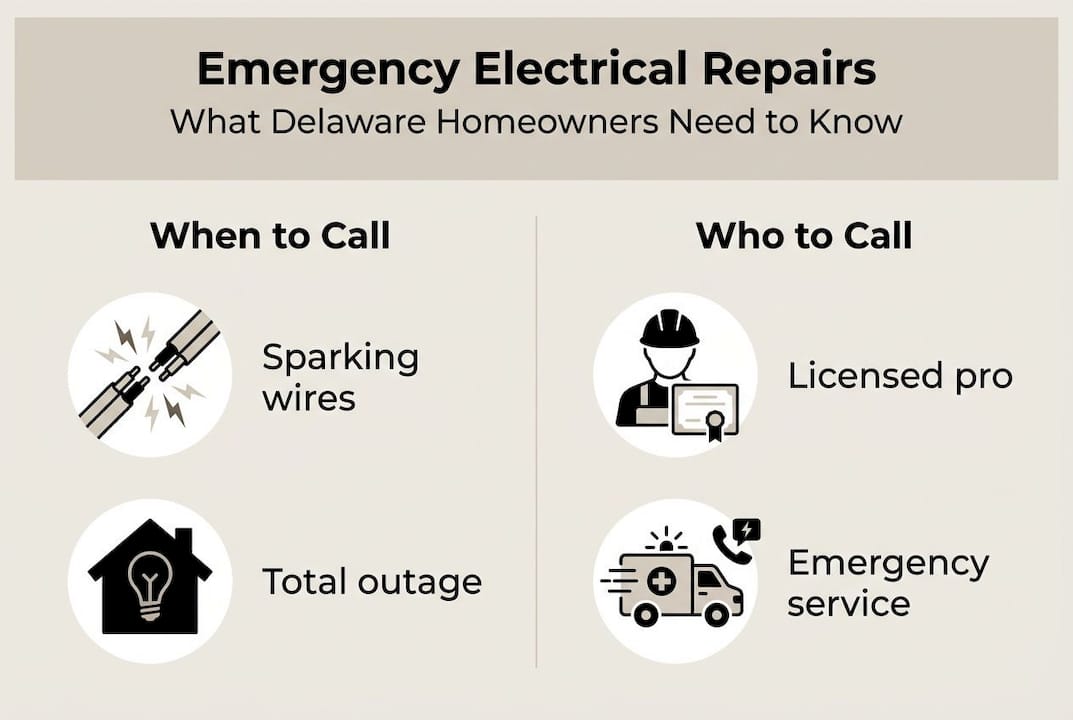
The numbers from Delaware tell a clear story. The Statewide Emergency Repair Program repaired 179 homes in 2024 for hazards including electrical issues, and Delaware’s fire data shows 2.3 deaths and 6 injuries per 1,000 fires in 2023, which is lower than national averages. Professional intervention is a key reason those numbers stay relatively low.
Here is what you stand to lose by cutting corners:
- Insurance denial if a claim involves unlicensed work
- Fines and legal liability from code violations discovered during inspections
- Increased repair costs when a quick fix makes the underlying problem worse
- Personal injury from improperly repaired circuits or panels
DIY electrical fixes during emergencies are especially dangerous because stress and urgency lead to shortcuts. A homeowner who bypasses a breaker to restore power quickly may create a far more dangerous situation than the original problem.
Pro Tip: Schedule a preventive electrical inspection every three to five years. Catching problems early is almost always cheaper than responding to an emergency, and it can lower your insurance premiums over time.
When you need to call emergency services, choose a provider who can respond quickly and document the work properly for your insurance records.
What to do in an electrical emergency: Step-by-step triage and next steps
When something goes wrong with your electrical system, clear thinking matters. Here is a simple process to follow:
- Stay calm and assess the situation. Is there smoke, sparking, or a burning smell? Is anyone in immediate danger?
- Turn off the power at the main breaker if it is safe to do so. Do not touch the panel if there is water nearby.
- Evacuate the building if you smell burning, see flames, or suspect a fire inside the walls.
- Call 911 if there is an active fire or if anyone has been injured.
- Contact a licensed electrician for urgent response once the immediate danger is controlled.
- Document everything. Take photos of the damage, note when the problem started, and record any recent work done on the system.
- Do not restore power until a licensed professional has inspected and cleared the system.
Triage first, then full repair: isolating the danger immediately is always the priority. Preventive inspections reduce the chance you will ever face this situation.
Never attempt to repair wiring, replace breakers, or open your electrical panel during an active emergency unless you are a licensed electrician. The risks include electrocution, fire, and permanent damage to your electrical system.
When you call for help, have this information ready: your address, a description of what happened, whether power is currently on or off, and any recent electrical work or appliance additions. This helps the best emergency electricians arrive prepared with the right tools and parts.
What most Delaware homeowners miss about electrical emergencies
After more than 20 years working in Delaware homes and businesses, we have seen the same pattern repeat itself. A homeowner notices a warning sign, decides it is probably nothing, and waits. Sometimes they wait weeks. By the time they call, what could have been a straightforward repair has become a panel replacement, a rewiring job, or worse.
The myth that only major outages require emergency service is genuinely dangerous. Small warning signs, a warm outlet cover, a light that dims when the refrigerator kicks on, a breaker that trips every few days, are often the first signs of a serious underlying fault. Treating them as emergencies is not overreacting. It is the financially and legally smart move.
Delaware law is also not on your side if you delay and then attempt a fix yourself. The legal and insurance consequences of unlicensed work are real, and they hit hardest when you are already dealing with damage. The right first call is always to a fast, licensed professional. Emergency help near you is closer than most people realize, and making that call early is what separates a manageable repair from a catastrophic one.
Need help now? Get fast, licensed emergency repairs in Delaware
When an electrical emergency strikes, you need a team that knows Delaware’s codes, responds fast, and documents everything your insurance company requires.

Conductive Electrical Contracting has served Delaware homeowners and businesses for over 20 years, providing 24/7 emergency response with fully licensed electricians. Whether you are dealing with storm damage, a failing panel, or a sparking outlet, we arrive prepared to fix the problem safely and correctly the first time. Our licensed electrical repairs meet NEC standards and protect your insurance coverage. Serving Wilmington, Newark, and surrounding areas, including our Dover DE electrician team, we are ready when you need us most. Call us now for an immediate response.
Frequently asked questions
What counts as an electrical emergency in Delaware?
Any issue that threatens health, safety, or property, such as sparking, total power loss, burning smells, or exposed wiring, is considered an emergency requiring immediate repair by a licensed electrician.
Who is allowed to fix emergency electrical problems in Delaware?
Only state-licensed electricians or homeowners with specific permits can make repairs; unlicensed work is illegal and can void your homeowner’s insurance policy.
What should I do first in an electrical emergency?
Immediately isolate the danger by turning off power if safe to do so, avoid any water contact near electrical components, evacuate if needed, and call a licensed professional. Triage first, then arrange full repair.
Why is using a licensed electrician so important?
Licensed repairs ensure NEC compliance and insurance validity; unlicensed work can be rejected by insurers and may result in fines, unsafe conditions, or denied claims after a fire or flood.